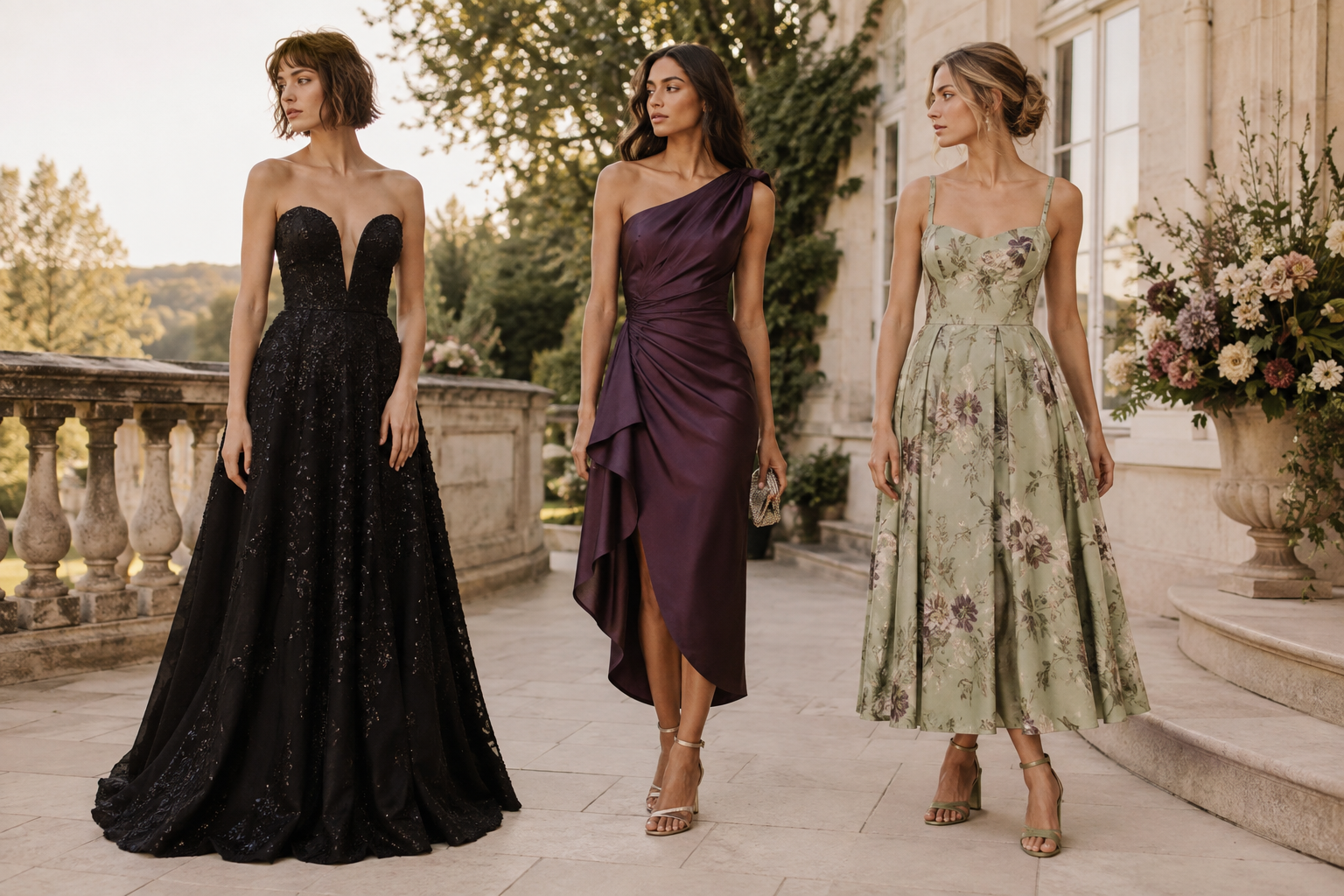
You’ve just opened the most beautiful wedding invitation, and right there at the bottom in elegant script, it says “black-tie optional.” Or maybe “cocktail attire.” Or — wait, “garden party chic”? Suddenly that exciting save-the-date feels less like a celebration and more like a fashion pop quiz you didn’t study for.
If you’ve ever stared into your closet wondering what on earth a wedding guest is supposed to wear, this wedding guest dress code guide is for you. We’re breaking down every dress code you’re likely to see on an invitation in 2026 — from white-tie formality to laid-back garden party vibes — with real outfit inspiration and shoppable picks from our trusted partners at Jan’s Boutique, where over 15,000 dresses are in stock and ready to go.
Why Wedding Dress Codes Actually Matter
Dress codes aren’t arbitrary rules invented to torture guests. They’re a shorthand the couple uses to set the tone of their entire celebration. A black-tie wedding at a historic hotel calls for a completely different energy than a barefoot beach ceremony — and showing up dressed for the wrong one can leave you feeling like the odd one out in every photo.
Beyond aesthetics, honoring the dress code is a quiet way of honoring the couple. They’ve planned every detail, from the flowers to the napkin folds, and your outfit is part of that bigger picture. The good news? Once you understand the language, dressing for any wedding becomes surprisingly simple.
The Golden Rules Every Wedding Guest Should Follow
Before we dive into specific dress codes, there are a handful of universal rules that apply to every wedding, full stop. Never wear white, ivory, cream, blush, or champagne unless the invitation specifically requests it — those shades belong to the bride. Avoid bridesmaid colors if you know them, skip anything overly revealing, and steer clear of attention-grabbing sequins so dense they’d compete with the bride’s gown.
Always consider the venue and time of day. A 10 a.m. garden ceremony reads very differently than a 7 p.m. ballroom reception, even if both invitations say “cocktail.” When in doubt, dress slightly more formally rather than less — you’ll never regret being polished, but you might regret being underdressed in every photograph for the rest of time.
White Tie: The Pinnacle of Formal
White tie is the rarest and most formal dress code you’ll ever encounter, reserved for state dinners, royal weddings, and the occasional ultra-traditional ceremony. If you’ve been invited to one, congratulations — you’re attending an event most people only see in films.
For women: A full-length ball gown is non-negotiable. Think floor-sweeping silhouettes in luxurious fabrics like silk, satin, duchess, or velvet. Long gloves, statement jewelry, and an elegant updo complete the look. Pastels, jewel tones, and rich neutrals all work beautifully — just keep the silhouette refined.
For men: A black tailcoat, matching trousers with satin stripe, white piqué waistcoat, white wing-collar shirt, and a white bow tie. Patent leather shoes. No exceptions.
Shop the look: Explore floor-length formal gowns at Jan’s Boutique, where the evening wear collection includes designers like Daymor, Tina Di Martina, and other couture-level labels perfect for the most formal occasions.
Black Tie: Classic, Elegant, Unmistakable
Black tie is the dress code most people picture when they think “fancy wedding.” It typically signals an evening ceremony, an upscale venue, and a celebration where champagne flutes outnumber beer bottles by a wide margin. The good news: black-tie style has loosened slightly in recent years, leaving plenty of room for modern interpretations without breaking tradition.
For women: A floor-length gown is the safest and most elegant choice. Sophisticated jumpsuits in luxe fabrics also work beautifully, as do long, formal midi dresses in black, navy, emerald, burgundy, or deep jewel tones. Avoid anything too casual — no daytime florals, no cotton sundresses, no above-the-knee hemlines.
For men: A classic tuxedo with a black bow tie, crisp white shirt, and polished black oxfords. A very dark navy or midnight blue tuxedo is a modern alternative that photographs beautifully.
Accessories to nail it: Strappy heels, a sleek clutch, drop earrings, and a delicate wrap or shawl for cooler venues. Skip casual leather totes and chunky daytime jewelry.
Outfit inspiration: A floor-length emerald satin gown with a cowl neckline, paired with gold drop earrings and metallic heels. Or a sleek black column gown with a thigh-high slit and a beaded clutch. Browse evening gown options at Jan’s Boutique Online — their tax-free shopping and 50+ dressing rooms make finding the perfect black-tie gown surprisingly stress-free.
Black Tie Optional: Flexibility With Polish
Black tie optional is the diplomatic dress code. It tells guests: “We’d love for you to dress up to the nines, but we won’t be offended if you stop just short of full formal.” It’s perfect for evening weddings where the couple wants elegance without intimidating their entire guest list.
For women: A floor-length gown is still the most photogenic choice, but a formal tea-length, sophisticated midi, or chic cocktail dress in a rich fabric like velvet or beaded chiffon all work. Stick to darker, more saturated colors and dressier silhouettes.
For men: A tuxedo if you have one, or a dark, well-tailored suit (charcoal, navy, or black) with a silk tie. Polished leather dress shoes are essential.
Formal and Creative Black Tie
“Formal” without the black-tie label leaves a little more interpretive room, while “black tie creative” or “creative black tie” invites guests to add a personal flair — think a colored tuxedo jacket, a bold patterned bow tie, or a metallic gown instead of classic black.
For women, long gowns or formal midi dresses still rule, but you can play with color, texture, and embellishment. A sequined column dress, a velvet gown in a non-traditional shade like aubergine or rust, or a satin slip dress with statement jewelry all hit the mark. For men, ditch the standard tux for a velvet dinner jacket, a textured bow tie, or even a deep burgundy tuxedo.
Cocktail Attire: The Most Common Wedding Dress Code
If there’s one dress code you’ll see again and again on wedding invitations, it’s cocktail. It strikes the perfect balance — formal enough to feel celebratory, but flexible enough to actually enjoy yourself on the dance floor. Cocktail attire typically signals a late afternoon or evening wedding at a stylish but not over-the-top venue.
For women: Knee-length or midi dresses are the sweet spot. Think tailored sheaths, fit-and-flare silhouettes, wrap dresses, or chic two-piece sets. Fabrics like crepe, satin, chiffon, lace, and silk all work. Color is wide open — jewel tones, pastels, florals, and bold solids all play well at cocktail-coded weddings.
For men: A well-tailored suit in navy, charcoal, gray, or even a seasonal color like olive or tan (for daytime weddings). Pair with a silk or knit tie and leather dress shoes.
Pro styling tip: Cocktail is where you can have the most fun with accessories. A statement earring, a beaded clutch, an embellished heel, or a fascinator at a daytime affair can elevate even a simple dress into something memorable.
Outfit inspiration: A midi-length floral wrap dress with block heels for a spring afternoon wedding. A satin slip dress in dusty rose with strappy sandals and a pearl clutch for a summer evening. Jan’s Boutique carries an extensive cocktail and evening collection in sizes 000 to 26, so every guest can find the right fit.
Semi-Formal and Dressy Casual
Semi-formal lives one notch below cocktail. It’s the dress code couples choose for daytime weddings, lower-key receptions, or destination ceremonies where guests need outfits that travel well. The goal is “I made an effort” without veering into ball-gown territory.
For women, knee-length dresses, tailored midis, dressy jumpsuits, or polished separates (think a silk blouse with a satin skirt) all work beautifully. For men, a suit is still expected, but you can skip the tie or opt for a more relaxed fabric like linen or cotton in summer months. Loafers replace oxfords for daytime celebrations.
Garden Party Attire: Romantic, Floral, Sun-Kissed
Garden party is one of our favorite dress codes because it’s so visually distinctive. Picture rolling lawns, white tents, dappled sunlight, peonies in every direction, and outfits that look like they belong in a Monet painting. This dress code is typically reserved for spring and summer daytime weddings held outdoors.
For women: Florals are practically required. Midi or tea-length dresses in soft pastels, watercolor prints, or bold botanical patterns are perfect. Flowy fabrics like chiffon, organza, and silk move beautifully in the breeze. Wedge sandals or block heels are smart for grass — stilettos and lawns are sworn enemies.
For men: A lightweight suit in tan, sage, dusty blue, or light gray. Linen and cotton blends are your friends. Skip the tie or opt for a playful patterned one, and consider loafers or suede dress shoes instead of formal leather.
Don’t forget: A wide-brimmed hat for sun protection, oversized sunglasses, and a pretty fascinator can all elevate a garden party look. Layering pieces like a light cardigan or shawl are smart for unpredictable outdoor temperatures.
Outfit inspiration: A tea-length floral midi dress in soft lavender with espadrille wedges and a wide-brim straw hat. A flutter-sleeve maxi dress in sage green chiffon with gold accessories. Find dreamy garden party styles at Jan’s Boutique Online — their stylists specialize in matching dresses to specific venues and dress codes.
Beach Formal and Tropical Chic
Beach formal is the dress code for destination weddings and waterfront venues. It walks a careful line: dressy enough to honor the occasion, breezy enough to survive sand, salt air, and sunshine. Think Hamptons elegance meets Caribbean ease.
For women, lightweight maxi dresses, flowy midi dresses, or chic jumpsuits in tropical prints, soft pastels, or crisp whites (only if the invitation invites white) all work. Avoid heavy fabrics, structured ball gowns, and anything stiletto-heeled. Wedges, flat sandals, or block heels are far more practical. For men, a linen suit in a light color, a crisp open-collar shirt, and loafers (often worn sockless) capture the vibe perfectly.
Casual Wedding Attire (Yes, This Is Still a Dress Code)
“Casual” on a wedding invitation does not mean jeans and a t-shirt. It means “comfortable but still elevated” — sundresses, skirts and blouses, flowy maxi dresses, or tailored separates. For men, dress pants or chinos with a button-down shirt, no tie required.
The line to avoid crossing: anything you’d wear to brunch, the grocery store, or the office. Even casual weddings deserve a touch of effort. Save the jeans, sneakers, graphic tees, and athletic wear for literally any other day of your life.
Festive Attire: The Wild Card
Festive attire pops up most often for holiday weddings, themed celebrations, or culturally specific events. It’s an invitation to lean into color, sparkle, and personality. Think rich jewel tones, metallics, sequins, velvet, and bold prints. For women, a sparkly midi or a velvet gown in emerald or sapphire. For men, a velvet blazer, a patterned tie, or a tartan accent.
Quick-Reference Wedding Guest Dress Code Cheat Sheet
- White Tie: Full-length ball gown or tailcoat. The most formal it gets.
- Black Tie: Floor-length gown or formal jumpsuit; tuxedo for men.
- Black Tie Optional: Long gown or formal cocktail dress; tux or dark suit.
- Formal / Creative Black Tie: Long gown with personality; tuxedo with flair.
- Cocktail: Knee-length or midi dress; dark suit and tie.
- Semi-Formal: Midi dress or polished separates; suit, tie optional.
- Garden Party: Floral midi or tea-length dress; light linen suit.
- Beach Formal: Flowy maxi or midi; linen suit and loafers.
- Casual: Sundress or elevated separates; chinos and button-down.
- Festive: Sequins, velvet, or jewel tones; velvet blazer or patterned details.
What to Wear When the Invitation Doesn’t Specify a Dress Code
If there’s no dress code listed at all, your invitation is doing more work than you realize. Look at the venue (ballroom vs. backyard), the time of day (3 p.m. vs. 7 p.m.), and the season. Evening weddings at formal venues default to cocktail at minimum. Daytime outdoor weddings lean semi-formal or garden party. When you’re truly stuck, cocktail attire is the safest universal choice — you’ll rarely be over- or underdressed in a beautiful midi dress and heels.
Where to Shop for Wedding Guest Dresses
Finding the right wedding guest dress doesn’t have to be stressful. Our top recommendation is Jan’s Boutique in Cherry Hill, NJ — a tri-state landmark since 1974 with over 15,000 dresses in stock from 50+ designers. They carry everything from black-tie evening gowns to garden party midis to mother-of-the-bride styles, with sizes 000 to 26 and a team of expert stylists ready to match you to the perfect look. Tax-free shopping is the cherry on top.
Whether you’re planning ahead for a wedding season packed with celebrations or scrambling to find something for next weekend’s ceremony, browsing JansBoutiqueOnline.com is a smart first step. You can preview collections, book an appointment, and walk in knowing exactly what you want to try on.
Final Thoughts: Dress Codes Are Easier Than They Look
Wedding dress codes can feel intimidating, but they’re really just a friendly nudge from the couple about how to dress for their big day. Once you understand the basic vocabulary — black tie, cocktail, garden party, and everything in between — you can shop with confidence and show up looking polished, photo-ready, and perfectly in tune with the celebration.
The best wedding guest is the one who blends seamlessly into the joy of the day. Honor the dress code, leave the white at home, and bring your best dancing shoes. The rest takes care of itself.
Ready to find your next wedding guest dress? Browse the latest evening and cocktail collections at Jan’s Boutique Online — or book an in-person appointment at their Cherry Hill, NJ showroom.