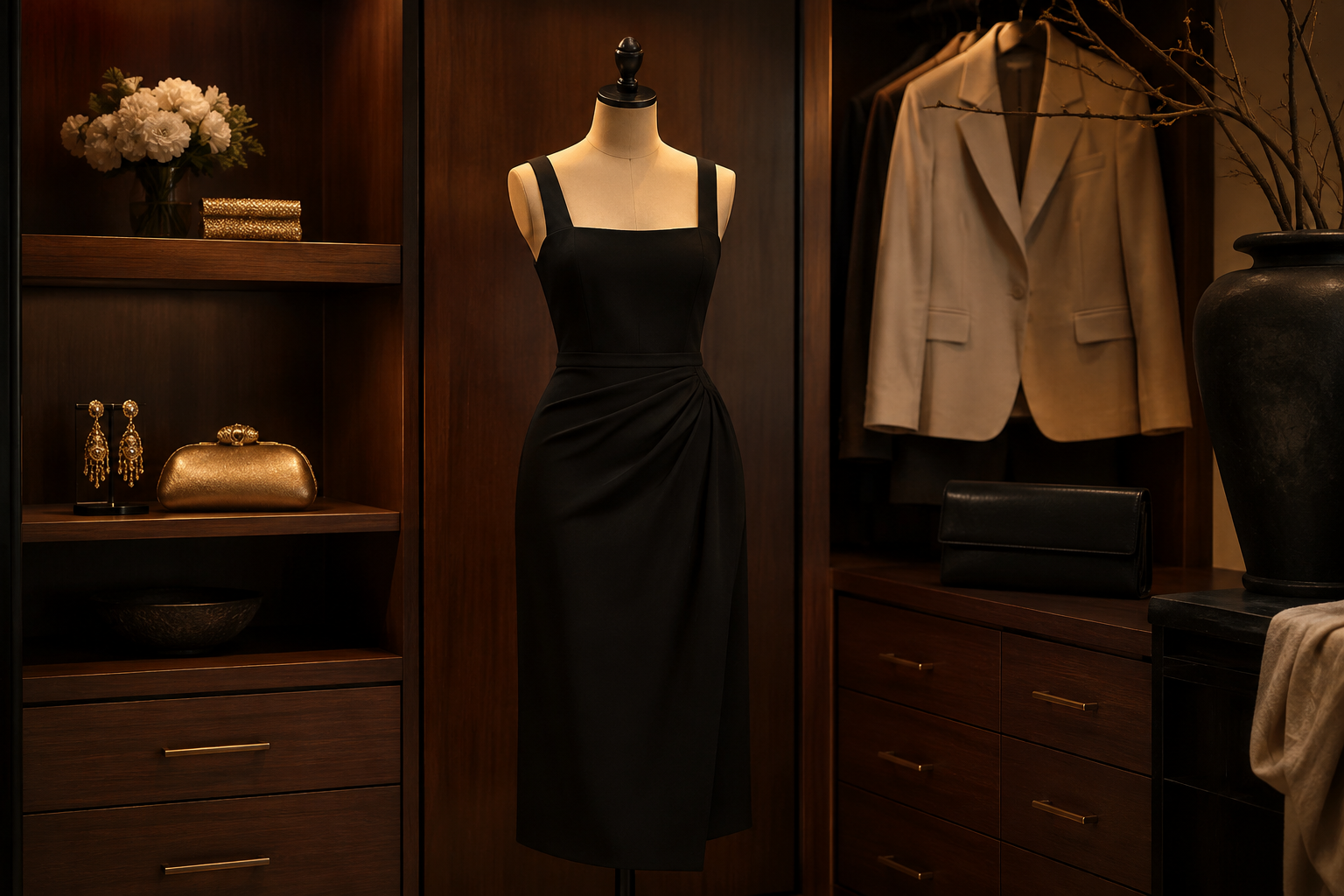
THE BELLE EDIT · THE LOOK
The invitation is new. The black dress is familiar. This time, she starts with what already works.
An imagined evening, with a practical occasion-dress rewear plan. Read the invitation, inspect the dress and rehearse the complete outfit before buying anything. Repeating the original look is an option, too.
CHAPTER 01
The Dress in the Back of the Wardrobe.
She finds it behind the work jackets: the black dress from a dinner she still remembers. Her first thought is that everyone has seen it. Her second is that she liked wearing it. She brings it into the light.
Before making the dress a project, she reads the new invitation. An evening reception, dinner indoors, a short walk from the car. She writes the dress code and arrival time beside the address. A favorite outfit gets another chance when it suits this occasion.
Use the hosts’ instructions, venue and planned activities to decide whether your dress is a candidate. If something matters and the invitation does not explain it, ask a specific question. You can love a garment and choose something else for this event.
CHAPTER 02
She Checks Before She Changes.
The clasp closes. The hem looks intact. There is a mark she had forgotten near the side seam. Instead of trying a cleaning tip from memory, she takes a photograph of the label and makes a note to ask about it.
Inspect closures, seams, decoration and lining while there is time to get advice. Separate repair questions from cleaning questions. The maker’s instructions for the actual garment matter more than its color or resemblance to another dress.
Tadashi Shoji’s care guidance advises following the garment label and consulting an experienced cleaner. Our occasion-dress care plan helps organize the information to bring to that conversation.
CHAPTER 03
The Same Dress, Today’s Try-On.
She puts it on with the underlayers she intends to wear now. Then come the shoes. Standing at the mirror is only the beginning: she sits, walks, reaches for the door and checks the hem again.
Notice what needs attention today rather than relying on a photograph from the last event. If different shoes change where the skirt falls, ask a fitter about the actual garment. Avoid making a fastening close by force or planning around a hoped-for body change.
The familiar shoes still work. The jacket sleeve catches when she lifts her arm. That small discovery gives her a useful decision: try a different layer before deciding the dress is the problem.
CHAPTER 04
One Detail Gets a Different Role.
She lays out the original earrings and bag, then brings over a second pair of earrings. She tries each pair with the same dress and takes two photographs from the same position. The quieter pair wins this time.
Change one element at a time if you want to explore another look. A different bag, jewelry piece or layer may be enough. Look at the whole outfit after a short break; adding more is not the same as making it more personal.
For another way to compare accessories, our one-favorite-piece approach begins with something you want to wear. The exercise works beyond a wedding-family outfit: let the piece earn its place in the complete look.
CHAPTER 05
The Bag Has to Close.
Her phone has changed since the last dinner. It will not pass through the old clutch’s opening with its case attached. She tries another bag from the wardrobe and puts the actual essentials inside before settling on it.
Test the opening, closure and strap with your phone, glasses if needed, keys and personal necessities. Do not infer usable space from a product photograph. If a new bag is necessary, compare the selected version and return terms before ordering.
She rehearses carrying the bag with the layer over her arm. Everything has a place. The dress has not changed; the outfit now fits the evening she is actually planning.
CHAPTER 06
She Leaves a Note for Next Time.
Before leaving, she takes one full-outfit photograph. The next morning she adds three lines beneath it: which shoes she wore, which bag held everything and what needs attention before storage.
Keep that record with the garment’s care information. A useful outfit note is specific: a fastening to repair, a layer to remember, a shoe combination to repeat. Follow the label and professional advice when arranging any care after wear.
Our jewelry-packing checklist is useful if the next occasion involves an overnight stay. Bring the pieces that belong to the finished outfit, separated appropriately, rather than the whole jewelry drawer.
FINAL LOOK
Another Evening Belongs to It.
At dinner, someone compliments the dress. She smiles and says she has worn it before. There is no explanation to give. The bag closes, the shoes are familiar, and she has stopped thinking about the outfit.
SHOP THE STORY
The starting point is your wardrobe: one occasion-appropriate dress, shoes you can use comfortably, a bag that holds your essentials and any layer the setting needs. This story does not require a new purchase. If your rehearsal identifies a gap, write down that job before shopping.
Styling illustration; pictured pieces are not exact retail selections.