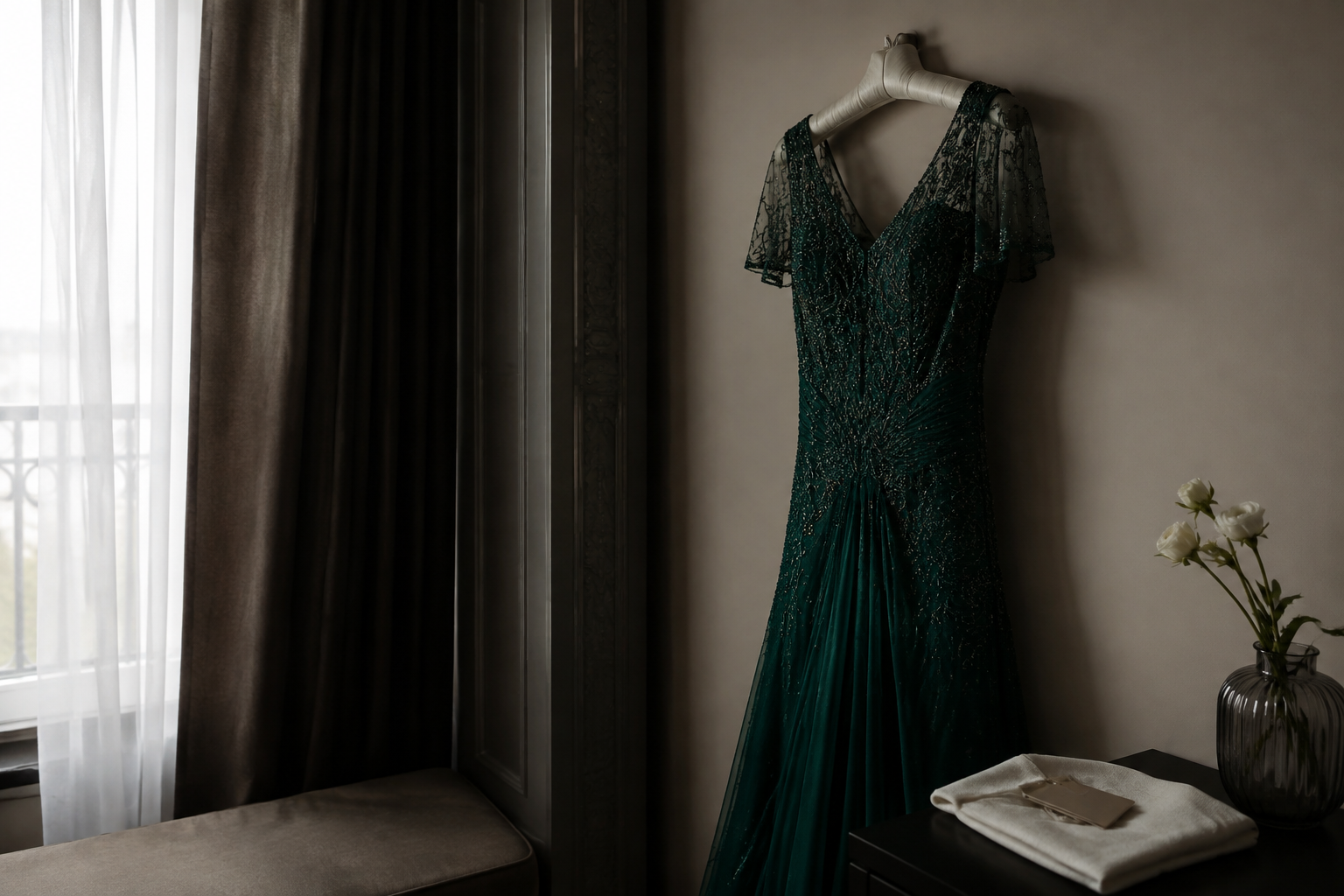
The dress is back home. There is a crease at the skirt, a mark near the hem and a steamer within reach. Before reaching for any of them, pause long enough to find the care label.
“Evening dress” describes an occasion, not a cleaning method. Two gowns can look similar while having different fibers, linings and embellishments. Tadashi Shoji’s care guidance makes a useful starting point: follow the label inside the dress and consult a trusted, experienced cleaner. The plan below is an editorial way to organize that conversation, not a replacement for the garment’s instructions.
Make a record before the event
Photograph the care label while you have time to read it. Save the designer name, style reference and any instructions supplied by the retailer in the same place. If the label is hard to read, ask the retailer for clarification before the celebration.
A photo of the dress before wearing it is useful too. Include areas you already want to ask about, such as delicate trim or a loose-looking detail. Keep the receipt and any spare embellishments where you can find them. You are building a small reference file, not taking on a restoration project.
Ask about creases before using heat
If the dress arrives creased, contact the retailer or a qualified cleaner about the exact garment. Describe the fabric and decoration, and share the style reference. Ask whether professional pressing is recommended and whether any areas require special handling.
Do not assume a general online tip applies to every layer of your dress. “Low heat” is not a complete instruction when you do not yet know what the fabric, lining or trim allows. If your event is approaching, make the appointment early enough that you can collect the dress and check it before leaving.
My planning preference is to resolve this before packing. That avoids making the hotel bathroom the first place you investigate garment care.
After the event, describe what happened
If you notice a spill or mark, note what caused it, roughly when it happened and anything already applied to it. Take a clear photograph without experimenting with a treatment just to improve the picture.
Give that information to the cleaner. “Something near the hem” is less helpful than a precise description of the location and circumstances. If you do not know what the mark is, say so. You do not need to diagnose the stain yourself to provide useful context.
Avoid trying several household remedies in succession. Ask for garment-specific advice first, especially when the surface includes beads, lace or other decoration. This article deliberately offers no universal stain-removal recipe.
Arrange the handoff clearly
When contacting a cleaner, ask whether they handle this kind of occasionwear, what assessment they need and when the garment can be ready. Mention your next event if you have one. Ask how they want you to bring the dress in and what storage method they recommend afterward.
Before authorizing work, request an explanation of the proposed treatment and price. If a repair or loose embellishment also needs attention, flag it separately. A cleaning appointment is a good time to identify the issue, but do not assume every cleaner offers the same repair services.
Close the loop when you collect it
Check the dress with the cleaner before taking it home. Refer to your original notes and ask about anything that remains. Keep the care advice with the garment, especially if the instructions include a particular way to support, cover or store it.
When the dress is ready for another outing, try it on with the actual accessories and shoes again. The fact that it worked at one event does not settle the dress code for the next; our wedding guest dress-code guide can help with that separate decision.
A beautiful garment is easier to enjoy when care is part of the plan. Save the label, ask before treating it and leave yourself time to get a useful answer.