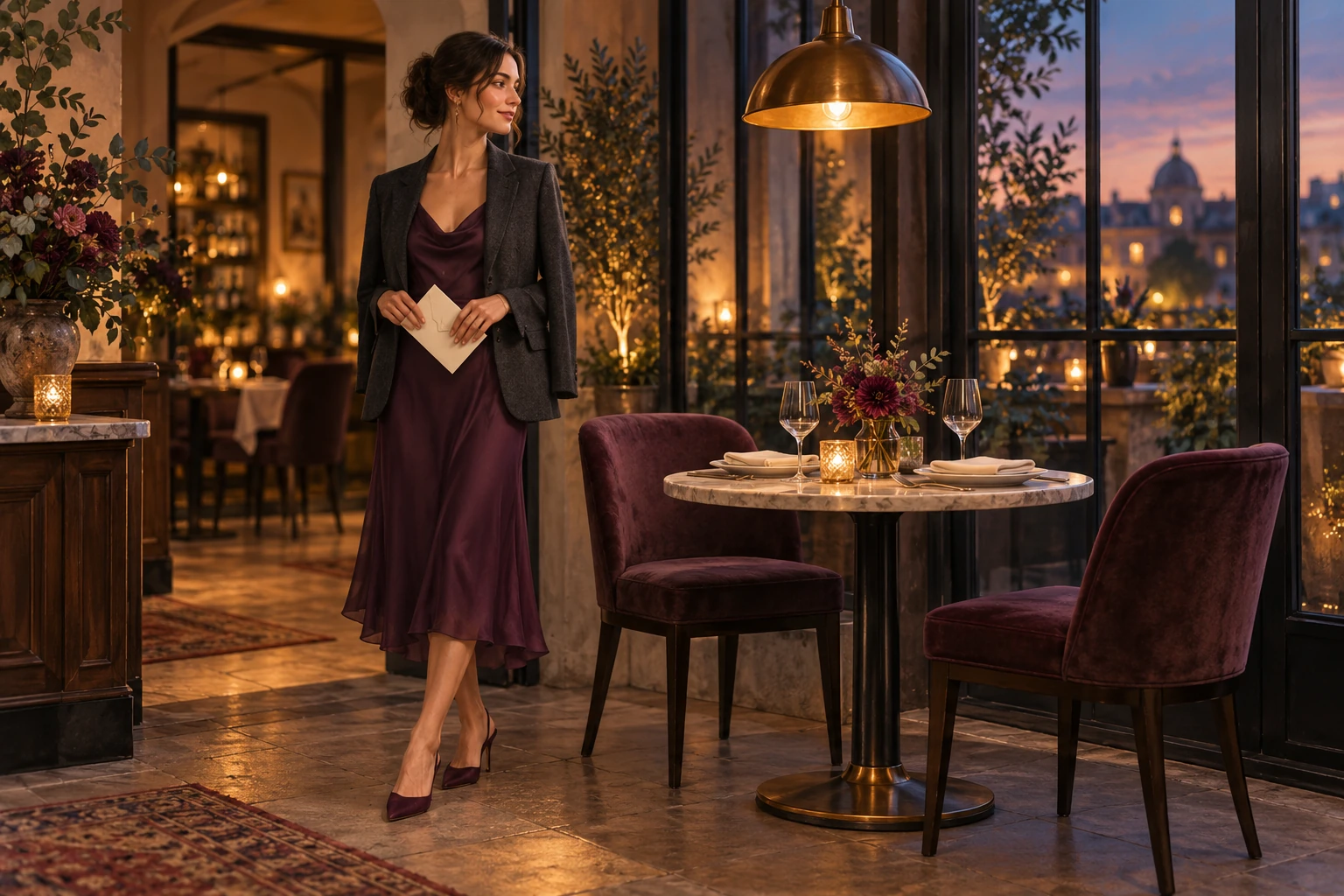
Editorial styling illustration; not an exact retail product or a documented event.
Read the rehearsal-dinner invitation before borrowing the wedding’s dress code. The dinner may have a different venue, guest list and level of formality. Your first task is to establish the event you are invited to, then choose clothing for that particular evening.
The worksheet and looks below are editorial suggestions. The actual invitation and host’s answers are the primary sources for your plans; no general outfit guide can replace them.
Make a separate event note
| Record | Your notes |
|---|---|
| Who is invited, including any named guest | ________________ |
| Date, arrival time and exact dinner address | ________________ |
| Dress code copied exactly | ________________ |
| Indoor / outdoor portions and expected surfaces | ________________ |
| Whether you also attend a ceremony rehearsal | ________________ |
| Travel between rehearsal, lodging and dinner | ________________ |
| Specific color or cultural requests from the hosts | ________________ |
| Venue requirements confirmed directly | ________________ |
| Contact and date for any clarification | ________________ |
Being invited to the wedding does not by itself tell you whether you attend this dinner or the rehearsal. If the wording is unclear, ask the host directly. Likewise, do not assume the dinner is less formal than the wedding or that a particular color is always required or forbidden.
Three possible starting points
A casual restaurant dinner
Try trousers you like with a soft shirt or knit and shoes that work for the journey. A simple midi dress with a light jacket is another option. Check the restaurant’s actual requirements if needed; “casual” in a host’s message does not identify the temperature, seating or outdoor portions.
A cocktail dinner
A plum midi dress with a charcoal jacket is one proposed direction. Another is a tailored trouser outfit with a dressier top and one favorite accessory. Compare the full combination with the invitation’s wording and your own comfort, rather than relying on hem length alone to decide formality.
An explicitly formal dinner
Start with the precise formal code given. A long evening dress or a formal tailored outfit may provide a useful direction, but confirm any specific requirements before choosing. Plan the outer layer and arrival shoes with the complete look, especially if you are moving between buildings.
Resolve the one question that changes your choice
A short message can be enough: “I’m planning my outfit for the dinner at [venue]. Is the dress code [wording], and will any part be outdoors?” Add a color question only if it affects the outfit you are considering. You do not need to submit an entire shopping shortlist for approval.
Our dress-code guide can help you interpret the words, while the host resolves what those words mean for this event.
Give the journey its own space
- Try the outfit seated, with your intended layer and bag.
- Confirm whether you will change after the rehearsal or arrive already dressed for dinner.
- Keep any garment carrier or spare layer out of the dinner bag; arrange where it will stay.
- Check the next morning’s plans before lending or packing away something you will need again.
Use the wedding-weekend packing map to assign clothing to each invitation. Repeating a useful shoe, jacket or accessory can make the weekend easier without making every event the same outfit.