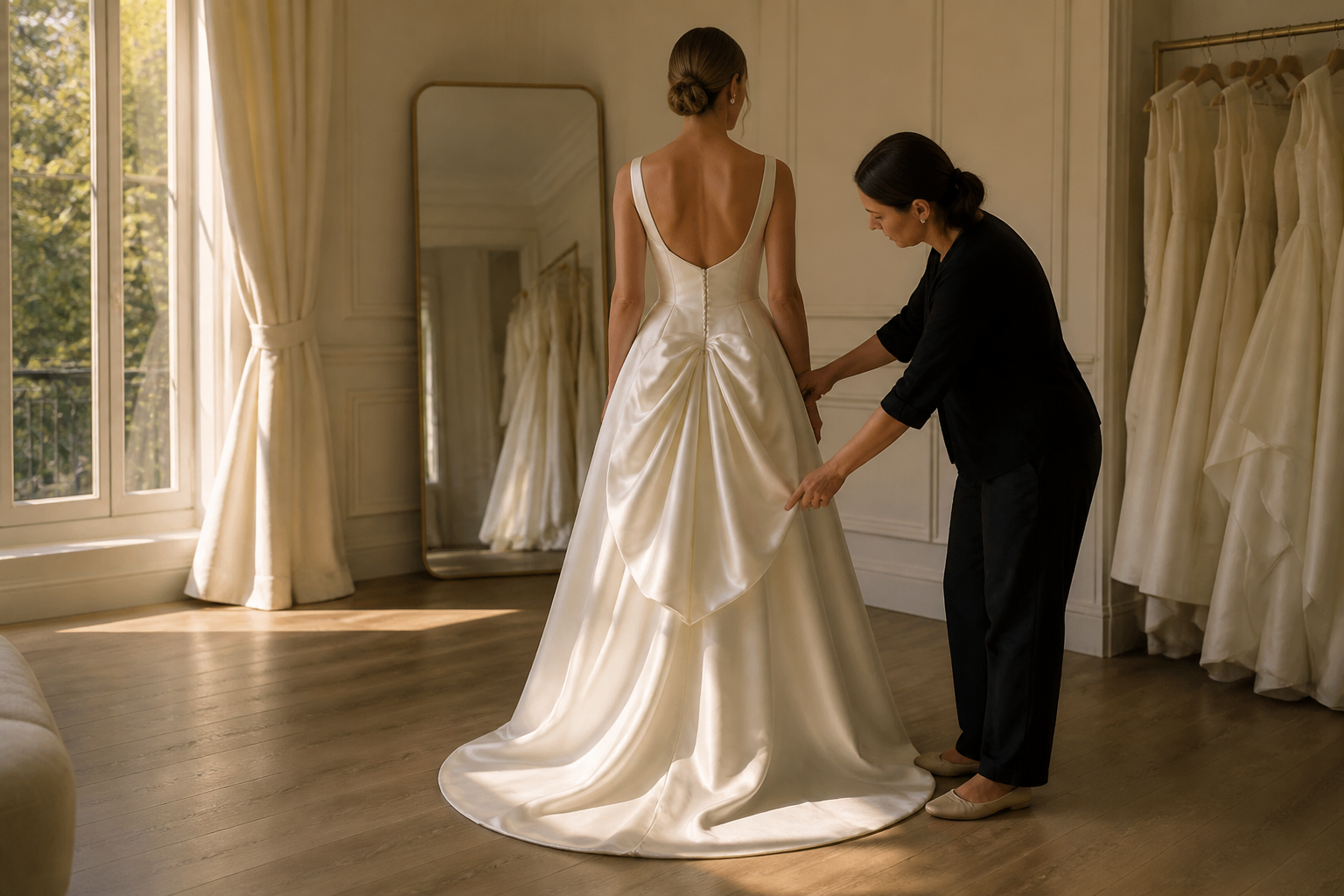
A wedding dress has two jobs on the same day. It needs to make an entrance, and it needs to let you enjoy the room after that entrance. A train makes the first job easy to picture. The second deserves its own fitting conversation.
A bustle gathers and secures a train using attachment points such as hooks, buttons or ribbons. David’s Bridal explains that this is typically added during alterations. Treat it as part of how the finished gown will work, rather than an accessory you can choose from a photograph alone.
1. What will the dress look like from all sides?
Ask your alterations specialist to show you the proposed shape on your actual gown. Look at the back, then turn sideways. Notice where the fabric gathers, whether the skirt still has the line you liked, and what happens to any lace or beading you want visible.
My suggested comparison is simple: take one photograph with the train extended and another with the proposed bustle pinned. Use the same position and light. You are comparing two versions of your own dress, which is more useful than collecting more reference gowns with different weights and shapes.
Do not choose solely by the name of a bustle style. Ask why that arrangement suits this particular skirt and which alternatives the specialist would consider.
2. Can I move in the finished arrangement?
Bring the shoes you intend to wear with the gown. David’s Bridal’s alterations guidance specifically includes wedding shoes, undergarments and the person who will help with the bustle among fitting essentials.
Once the specialist says it is safe to move, walk forward, turn, and try a few small dance steps. Ask to sit as well. Have your helper watch behind you. A mirror shows a still picture; your reception includes moving between tables, greeting people and changing direction.
If you plan to change shoes, bring that second pair and discuss both heights before the hem is finalized. Do not assume the reception pair will work simply because the ceremony pair does.
3. Who will fasten it, and can they explain it back?
Choose a specific helper rather than leaving the task to whoever happens to be nearby. Ask the specialist to demonstrate, then let your helper repeat the steps with guidance. With permission, record a close-up explanation on your phone.
I would save that video somewhere easy to find and give it a clear name. “Dress bustle instructions” is easier to retrieve during a busy reception than an unlabeled clip among several hundred getting-ready photographs.
Before leaving, have the helper describe the order in their own words. That small rehearsal reveals which connection or layer still needs explaining.
4. When does the train’s last photograph happen?
Put a brief transition into the wedding-day plan. If you want portraits with the train extended, tell your photographer before everyone moves to the reception. Then choose a practical place for the bustle change with room to stand and enough light to see the fastenings.
This is an editorial planning suggestion, not a required wedding tradition. The right moment depends on your photographs, venue and comfort. What matters is that the helper knows when and where to meet you.
5. What is the repair plan?
Ask what to do if a fastening loosens and which supplies, if any, your specialist recommends keeping with the gown. Get advice for your fabric and construction. Avoid improvising a heavy train attachment with whatever pin happens to be in a handbag.
Ask for the bustle cost, fitting requirements and pickup date in writing. There is no useful universal price for a job that depends on the gown and the work required.
The note to save before your fitting
- Photograph the proposed shape from the back and side.
- Bring both shoe options if you intend to change.
- Choose a helper and rehearse the fastening sequence.
- Decide when the extended-train portraits finish.
- Ask the specialist for a garment-specific repair plan.
For another way to assess the whole look, read the wedding-gown photography breakdown. A dress should earn its still photograph and work for the hours around it.