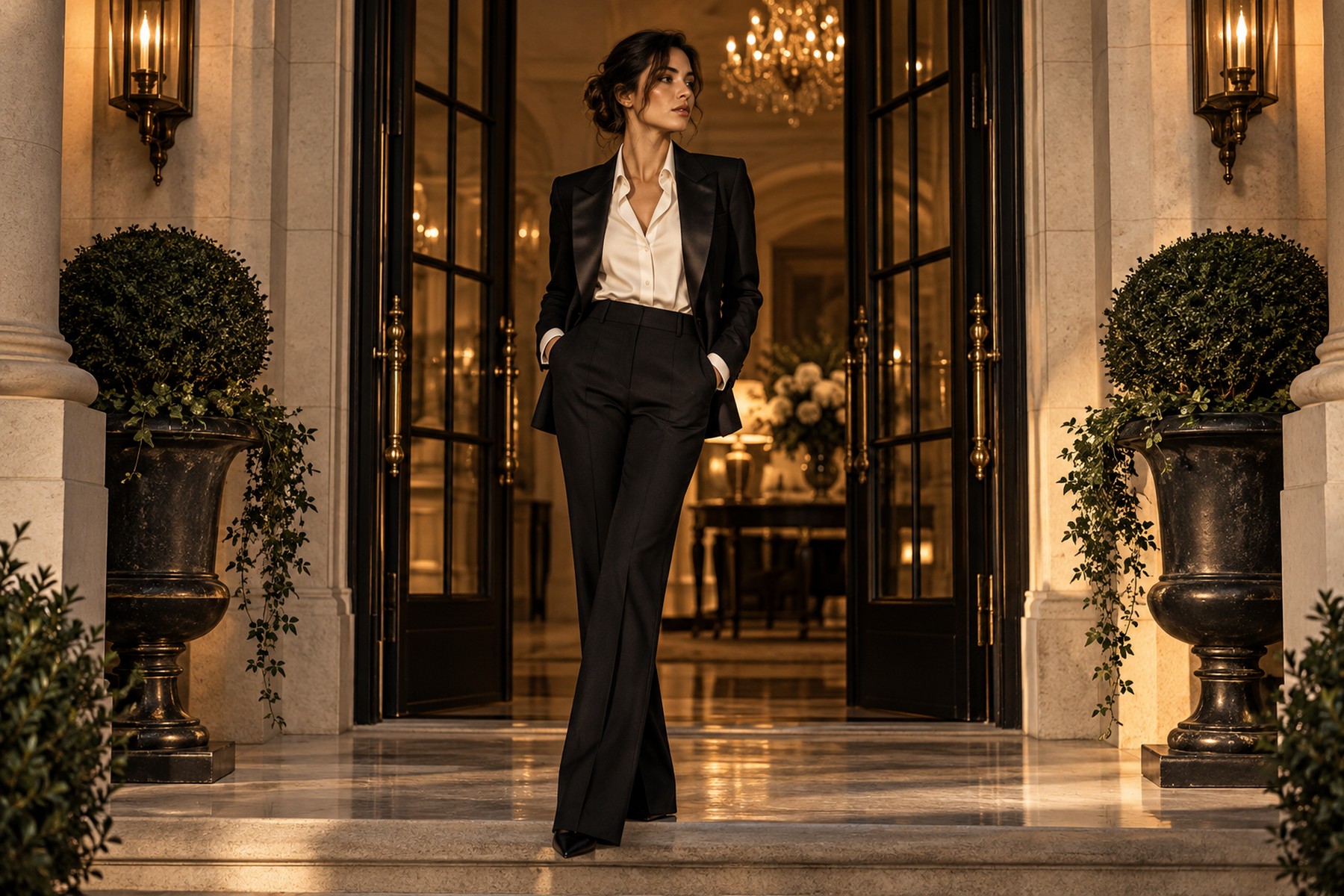
Original conceptual illustration; not an exact retail product.
If you prefer tailoring to a dress, build your wedding tuxedo as a complete formal outfit. Start with the invitation and the pieces together, then consider accessories. A jacket sold as a tuxedo does not settle the formality of everything worn with it.
Read the host’s brief first
Write down the actual dress code, ceremony requirements and any specific instructions. Our wedding dress-code guide helps distinguish black tie, black-tie optional and other invitations. If the wording leaves a relevant uncertainty, ask the host or designated contact a focused question about the outfit you intend to wear.
Emily Post’s black-tie guide places the code above business attire and describes a traditional tuxedo combination with a formal shirt and dress shoes. Its examples are organized by gender; they provide context for formality, not a promise that a particular women’s suit meets every host’s expectations.
Look at the tailoring details together
Compare the lapels, jacket fabric, trouser finish and shirt or top as one composition. Satin facing can create a different effect from a fully matte suit, but surface shine alone does not make a garment suitable. Check the maker’s description of the exact pieces and view them together where possible.
If jacket and trousers are sold separately, confirm whether the maker intends them as a match. Similar color names can conceal differences in fabric and finish. A deliberate contrast is a styling choice; an accidental near-match may not give you the result you expected.
The invitation-to-outfit checklist
| Part of the plan | Question to settle |
|---|---|
| Invitation | What formality and ceremony instructions are actually stated? |
| Jacket and trousers | Do the fabrics, finishes and proportions work together? |
| Shirt or top | Does it create the coverage and formality you want under the jacket? |
| Shoes | Do they suit the event and work with the trouser hem? |
| Accessories | Which single detail should lead: lapel, tie, earrings or another piece? |
| Host question | Is any specific expectation still unclear? |
| Fitting | Can you sit, reach and walk in the complete combination? |
Choose a neckline deliberately
An ivory shirt, a simple formal top and a bow-tie arrangement give different results. Try the actual neckline with the lapels instead of buying each piece from an isolated photograph. Decide whether the jacket will stay closed, open or come off, and assess the top in each version you intend to use.
Keep the meeting point between top and trousers comfortable while sitting. Our formal-separates guide offers a useful way to check overlap and movement, even when the lower piece is a trouser rather than a skirt.
Finish with a practical rehearsal
Wear the intended shoes while checking the hem. Carry the bag you plan to bring and sit with the jacket arranged naturally. Ask an alterations specialist to assess specific concerns; do not assume shortening the trousers resolves a different issue through the seat or rise.
Choose jewelry after the main combination works. You can keep the lapel as the focal detail or add a piece you enjoy. The result should feel intentional for this wedding and comfortable to you, without requiring a dress as the default alternative.
Sources and scope
Sources checked October 17, 2026. This is an editorial planning tool, not a product test or a guarantee of an individual result.