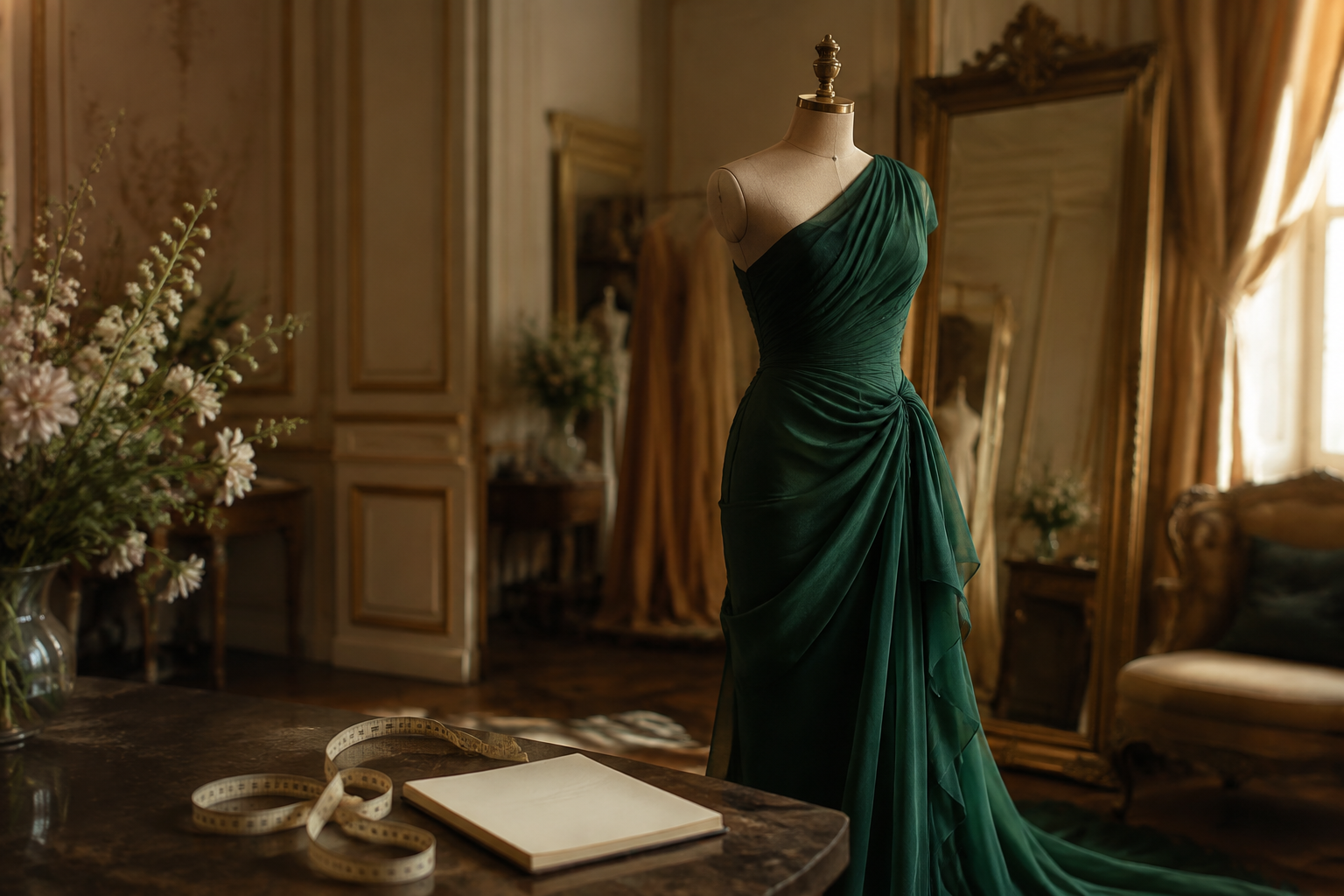
The photograph gets you interested. The size chart is where the order becomes specific. Before choosing a number from the dropdown, make sure you know which measurements the dress maker wants and which chart belongs to the style.
This is a practical ordering routine for prom and homecoming dresses. It leaves the final size recommendation with the retailer or alterations professional who can assess the actual garment.
Find the chart for the exact dress
David’s Bridal’s measuring guidance advises checking the garment’s specific chart because brands vary. Keep that chart open beside the product page. A screenshot saved from a different designer or dress category can send the comparison in the wrong direction.
Write down the brand, style reference, color and chart units. Confirm whether the chart describes body measurements or finished garment measurements. If the page does not explain that distinction, ask before trying to calculate the answer yourself.
Do not interpret a different size number as a judgment about your body. It is an ordering label. The useful question is how the manufacturer’s measurements relate to yours.
Use current measurements and the maker’s method
Follow the retailer’s measuring directions in full. David’s Bridal recommends wearing the undergarments planned for the dress and not measuring over other clothing. If you are unsure where to place the tape, ask for help from the shop or a professional rather than guessing.
Record the date and units with the numbers. A measurement in centimeters belongs beside a chart in centimeters; make any conversion deliberately and double-check it. Avoid using an old figure simply because it is the one you remember.
For a fitted bodice, open back or unusual neckline, explain the undergarments you intend to use. A product photograph cannot settle how your own support plan will work.
When your measurements point to different sizes
Send the retailer the style reference and ask how it recommends selecting a size for that construction. Ask which areas could be altered, whether there is enough time and what assessment an alterations specialist needs before giving an estimate.
Do not assume every dress can be made larger, or that every decorative detail can be moved easily. Avoid planning around a future body change. Start with the person who will wear the dress now.
Save the answer with your order notes. If a different staff member helps later, a written record makes the conversation easier to continue.
Separate arrival from readiness
An expected delivery date is only one date in the plan. You also need time to inspect the dress, try it on and arrange any work it needs. Ask what is physically available in your chosen size and color, then confirm the estimated dispatch and delivery details.
Read the current return and exchange terms for the specific item before paying. Look for exceptions involving sale items, special orders or altered garments. Do not assume a policy from a previous purchase still applies.
Keep the event date visible in your notes. If the plan only works when every step happens at the earliest possible moment, ask about another option before committing.
Make the first try-on count
When the dress arrives, follow the retailer’s inspection and return requirements. Try it with the intended undergarments and shoes, keeping tags attached where the policy requires. Notice the fit standing, sitting and walking without forcing a tight fastening.
Photograph any issue clearly and contact the retailer promptly. If the question is about alterations, bring the actual dress to the specialist. A general promise that a dress is “easy to fix” is less useful than an assessment of its seams and construction.
Before checking out, use our whole-look prom budget to account for the dress, fitting work and the pieces you will actually need. Keep written size and delivery answers with that list.