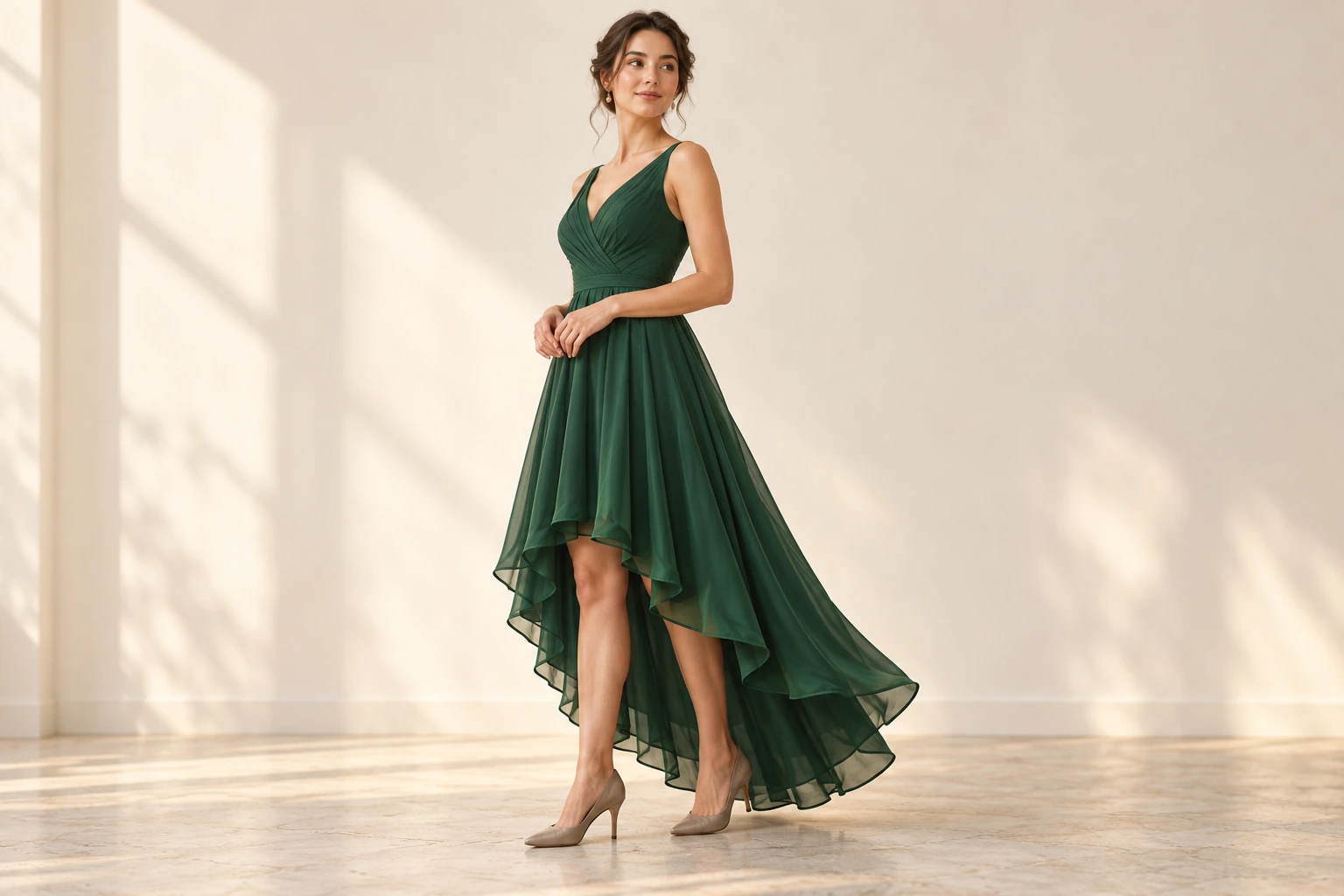
A high-low dress is designed to have different lengths. Before asking to shorten it, identify which part of that difference you want to keep. “Make the hem even” and “keep the shape, but change its clearance” are different requests, and neither should be inferred from a quick fitting photograph.
Describe the design before describing the problem
Look at the maker’s photographs of the exact style and compare the front, sides and back with the dress in front of you. Record what appears intentional: a short front, a sweeping back, curved side transitions, a ruffle or a border. Then describe your concern separately, such as fabric touching the floor at the back or a front length you would prefer to change.
A picture cannot diagnose a fit issue or confirm what alterations are feasible. Ask the tailor to assess the actual garment before deciding that shortening is the answer. The position of the dress on your body and the way its layers fall belong in that assessment.
Bring the shoes and keep the views comparable
Wear the intended shoes and underlayers at the fitting. With permission, take front, side and back reference photographs while standing naturally. Include the complete hem and shoes. A close crop of the front can hide the very transition you are trying to preserve.
If you intend to change shoes, bring both pairs and explain when the change happens. Our shoe-change and hem plan helps prepare that conversation. Do not choose a universal distance from the floor: the tailor needs to see your dress, shoes and intended movement together.
Make a keep / change / ask sheet
| Area or photo | Keep | Change | Ask the tailor |
|---|---|---|---|
| Front | ________ | ________ | ________ |
| Left and right sides | ________ | ________ | ________ |
| Back | ________ | ________ | ________ |
| Lining, trim or ruffle | ________ | ________ | ________ |
For example, “Keep the curved side line; discuss more clearance at the back” describes a preference without promising a method. Mark any uncertain point as a question. Let the professional handle pinning or other temporary fitting adjustments.
Ask what shortening would affect
- Which sections would change, and which would remain at their original length?
- How would the difference between front and back compare with the original design?
- What would happen to the lining, border, pleats, ruffles or other decoration?
- Would the proposed work change the side transitions or the skirt’s movement?
- What can be shown at a fitting before an irreversible step is approved?
There may be limits to preserving a particular edge or proportion. A suitable answer can be “this change is not advisable.” Decide whether the assessed option still gives you a dress you want to wear.
Approve a description you understand
Use our alterations-estimate checklist to connect the proposed work, cost and fitting sequence. Keep the agreed description with your photographs. This worksheet supports the consultation; it is not a cutting guide, a quote or a professional assessment of an unseen dress.
At the next fitting, return to the same views and shoes. Check the result against the decisions you recorded, including the parts of the high-low design you wanted to preserve.
Original editorial planning guidance. Sources and linked guides checked October 21, 2026. The illustration shows a styling concept, not an exact product or a documented event.