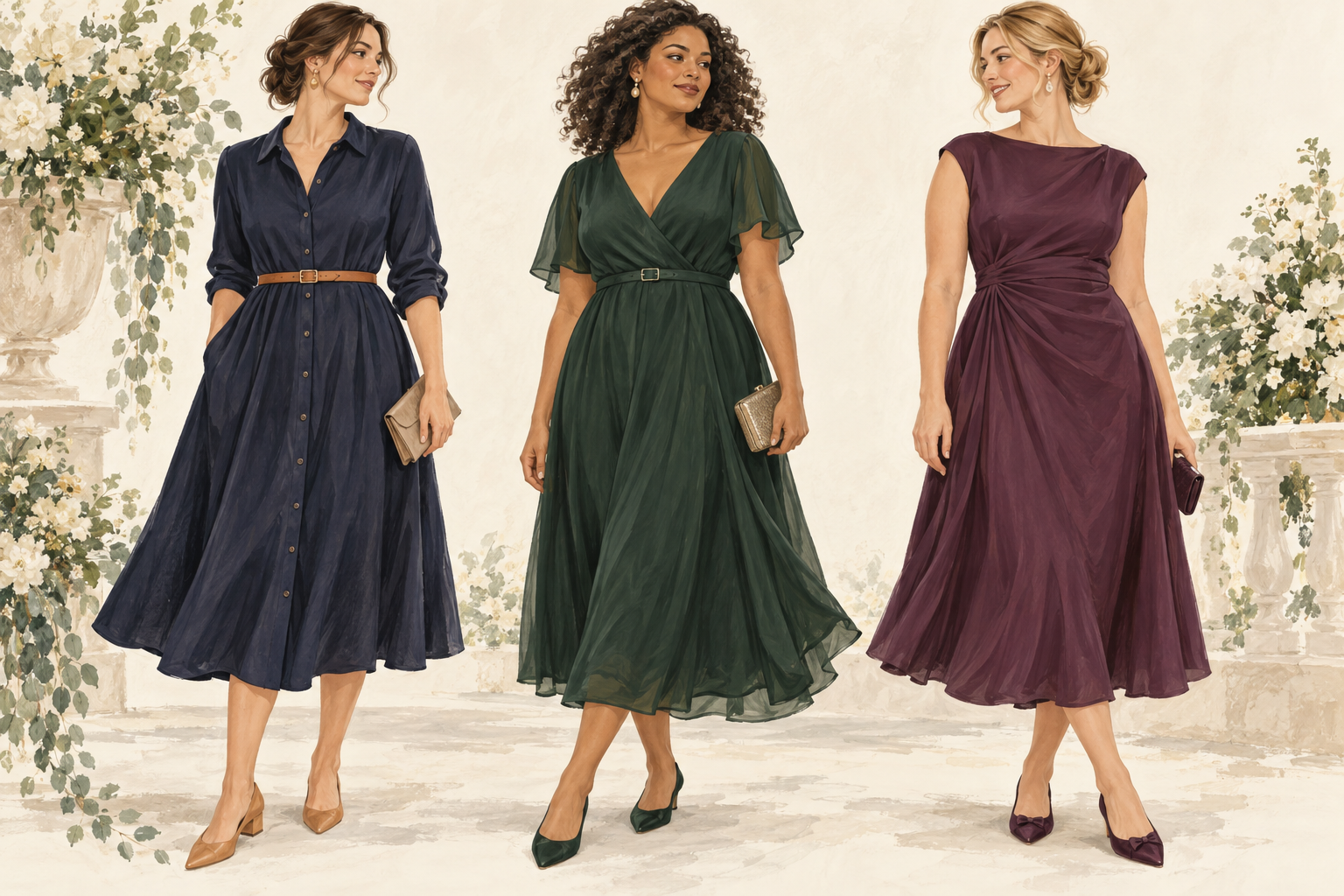
A belt can change the line of a wedding-guest dress, but it does not need to be part of every outfit. Try the dress without one first, then compare a belt you already own at the place you want it to sit. The useful checks are the width, the fastening, what happens to the fabric and how the combination feels when you sit. Keep the belt only if you prefer the complete look.
Start with a purpose—and the no-belt version
Put on the dress and look at it from the front and side before adding anything. Decide what you want a belt to do: repeat a color already in the outfit, introduce a focal point or replace a removable supplied tie. If you already like the dress as it is, that is a complete answer.
Consider the invitation too. A belt alone cannot make every casual dress suitable for a formal wedding. Use our wedding-guest dress-code guide if you need to settle the overall level of formality before comparing accessories.
Let the dress’s construction guide placement
Look for waist seams, belt loops, ruching, bows and embellishment. A strap may sit neatly over one seam but hide a detail you like elsewhere. Lay your owned belt around the intended position and check whether the fabric hangs freely below it.
Pass the strap through any intended loops gently. If it catches, folds the loops or requires force, stop. Do not cut loops, glue the belt down or add pins to make an unsuitable combination stay put. A dress without loops may allow a comfortable belt, but its position still needs to remain satisfactory when you move.
Measure where you plan to wear it
While standing normally in the dress, measure around the chosen wearing position over the fabric, without pulling the tape tight. Dents’ measurement guidance makes the useful point that the measurement belongs at the height where the belt will sit. Its page is for men’s belts; use that principle, not its size table or sizing formula, for this outfit.
Compare your measurement with the exact belt’s usable fit range and its definition of length. Overall strap length and the distance to a fastening hole are different things. Your clothing size, or the size of a belt worn lower on trousers, is not enough on its own. Pause a purchase if the seller’s chart does not explain the fit clearly.
Compare width, then color
First compare the width with the loops, seam and visible dress details. Brighton’s belt guidance highlights width, loop clearance and item-specific sizing. A narrow strap and a wider one create different accents; neither is universally better. Choose the version that sits comfortably and leaves the dress looking the way you prefer.
Then compare color while keeping the width similar. A belt close to the dress’s color makes a quieter division. A contrasting one makes the waist detail more noticeable. Stylist Imogen Lamport discusses width and tonal or contrasting belt choices; use those comparisons as options, not rules about your body.
Look at the buckle alongside your jewelry as well. An exact metal match is optional. What matters is whether you enjoy the combined effect, particularly if the dress already has an eye-catching neckline.
Two combinations to rehearse
Navy shirt dress with tan: A simple navy midi shirt dress can take a tan belt when its loops have enough clearance and the dress suits the invitation. The tan creates a deliberate contrast. Check that the buckle lies comfortably over the button placket and that the belt does not pull the front into an unwanted fold.
Dark dress with a similar dark belt: Try a dark green dress with a similarly dark green strap, or a dark navy dress with navy. This offers a quieter line while still adding a fastening detail. Look in ordinary light as well as the mirror: two dark finishes can differ more than you expect. Keep that difference if you like it.
The no-belt result: If a dress already has ruching or an embellished waist you want to show, remove the belt and compare again. Leaving the detail visible may be the version you prefer. There is no requirement to add another accessory in its place.
Fasten, sit and decide
Fasten comfortably and tuck the free end into the intended keeper. Inspect the front, side and back. Sit in an ordinary chair, stand again and check for shifting, pressure or unwanted gathering. If you keep adjusting it, try an owned alternative or leave it off.
Choose among three useful outcomes: keep this belt, use another one you own or wear the dress without one. Try the dress with and without your chosen belt, then do a seated outfit check before you decide.
Editorial illustration; styling concept, not a product photograph.