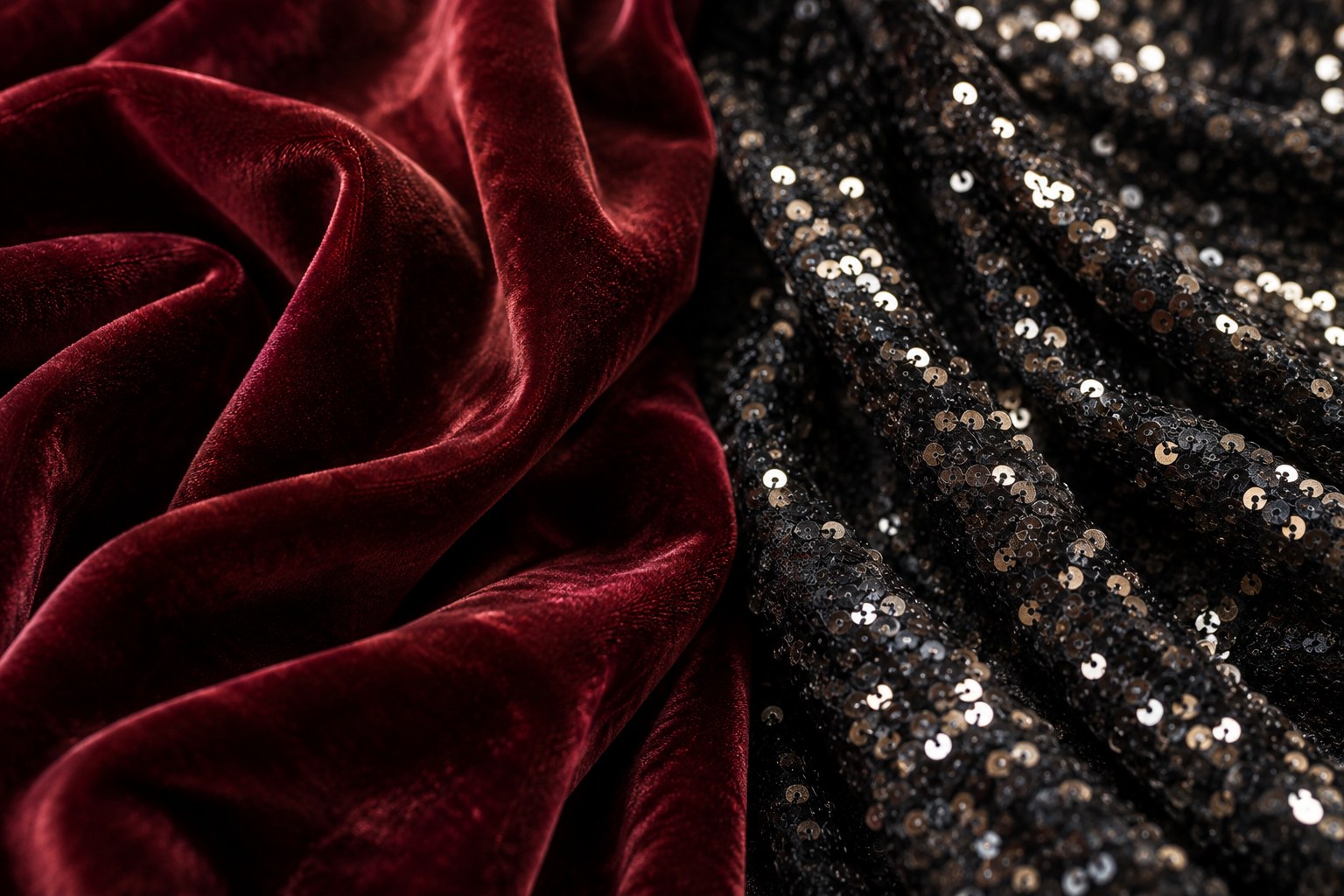
Original conceptual illustration; not an exact retail product.
Velvet or sequins is a useful visual starting point, but it does not tell you which dress will feel better through dinner and dancing. Compare the two actual garments: their lining, construction, weight, movement and care requirements. Neither label guarantees softness, stretch or comfort.
Put both dresses through the same try-on with the shoes and underlayers you expect to wear. If you are shopping online, use the missing answers as questions for the retailer instead of filling them in from photographs.
Separate the surface from the construction
Look inside each dress as well as at its outside. Where does the lining end? What touches the underarm, neckline and back of the knee? Does a seam feel bulky when you bend? A visually smooth surface can still have a firm lining, while a heavily decorated garment may be lined in the places that matter to you.
Record the stated fabric composition and any seller information about stretch, then check movement rather than pulling on the material. A stretchy panel does not establish that the waistband, fastening or lining stretches with it.
Use the same comparison for both dresses
| Check | Velvet dress: record what you find | Sequined dress: record what you find |
|---|---|---|
| Lining | Coverage, feel and seam placement: ______ | Coverage, feel and seam placement: ______ |
| Weight | Comfort at shoulders and waist: ______ | Comfort at shoulders and waist: ______ |
| Movement | Sit, reach and take normal steps: ______ | Sit, reach and take normal steps: ______ |
| Contact points | Neck, arms, chair and bag contact: ______ | Neck, arms, chair and bag contact: ______ |
| Care | Exact label and professional advice: ______ | Exact label and professional advice: ______ |
Include a seated check
Sit normally rather than balancing at the front of the chair for a photograph. Notice whether the waist presses, the skirt rides up, or the decoration meets bare skin. Stand again and see whether the outfit settles without a series of adjustments. If an area feels uncomfortable, stop and explain the problem to the retailer or fitter.
Bring the outer layer and bag into the comparison without rubbing them deliberately across delicate material. Look for chains, clasps or jewelry that may catch. Our velvet accessorizing guide covers finishing pieces; our seated outfit check helps you assess the whole silhouette.
Read the care label before choosing
Self-Portrait’s official care guidance directs customers to each product’s specific instructions and gives separate precautions for its velvet pieces. That is a useful example of why a general fabric label should not become a universal cleaning rule. Follow the instructions for the garment you buy, including any restrictions on heat, water and storage.
Ask about care costs if those would affect your choice. Do not assume a rented, borrowed or heavily embellished piece can be steamed because another dress tolerated it. If you cannot identify suitable care before the event, resolve that uncertainty before paying.
Make the decision explicit
Complete this sentence: “I prefer ______ because it passes ______, and I am comfortable with its care requirement of ______.” If the answer is only that one looks more dramatic on a hanger, return to the try-on. The useful winner is the dress you enjoy wearing through the event you actually have.
Sources and scope
Primary sources checked October 16, 2026. The worksheet and styling comparisons are Beau Morante editorial guidance; they are not personal product tests.