THE BELLE EDIT / THE ROUTINE
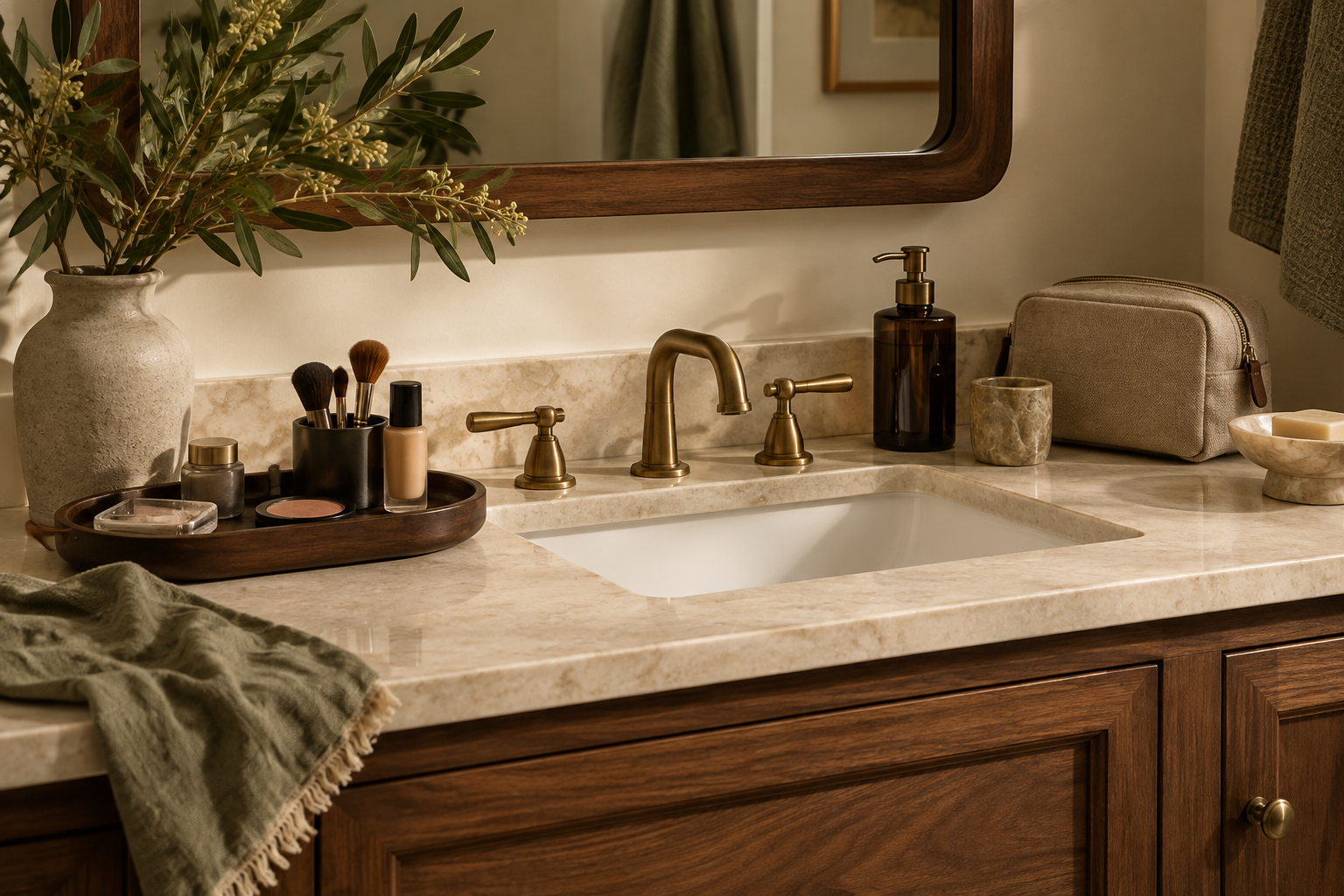
Imagine two adults getting ready in one small bathroom.
Her brush rolled toward the basin while he moved a bottle to make room for his shaving things. The counter was wide enough for one person's morning. Somehow, it had been asked to hold two people's entire cupboards.
The useful change was simple: leave the shared essentials in reach, give each person a portable daily kit and move reserves away from the working surface. She could keep her familiar routine. The counter needed a different arrangement, not another row of products.
CHAPTER 01
They Named What Had to Stay.
She took her things off the counter and he took his. For a moment, the whole surface was visible. They kept the hand soap beside the basin and checked that both could reach the tap without moving a bottle.
Start with what the space does for everyone. Washing hands needs access to the basin and soap. Getting ready needs a dry place to put the few things in use. A shared counter is not necessarily a counter divided into equal permanent piles.
They agreed that the area beside the basin would be a working space, cleared after each turn. If you get ready together, identify two workable positions; if that is too cramped, agree on an order. The arrangement should fit the actual room and the people using it.
CHAPTER 02
Her Routine Became a Short List.
On a towel in the bedroom, she laid out the products she had used that morning. The unopened backup bottles went in one group. The lipstick she liked for evenings went in another. The few familiar items she reached for every day stayed together.
Make three groups: daily use, occasional use and reserves. Keep products in their labeled containers and read their storage directions before choosing a home. This is also a chance to check any expiry or use-after-opening information provided by the maker, rather than assigning every product the same deadline.
The FDA's cosmetics storage guidance explains that storage conditions affect cosmetics and advises against sharing makeup. Sharing a room does not require pooling personal products. She kept her cosmetics with her own kit and chose storage away from shower spray and direct heat, following the labels.
CHAPTER 03
The Pouch Had to Fit Open.
She already owned a zip pouch, but she had never tried opening it on this counter. Packed with the daily group, it fitted beside the basin. Unzipped, she could see what she needed without tipping everything onto the surface.
Test a container with the real products inside. Check the opening, the tallest bottle and the longest tool. Then set it where you will use it. A pouch that fits the drawer while closed may take up the whole counter when unfolded.
The beauty-bag checklist starts with actual products and their measurements. Use those measurements to edit the kit, then open it on your own counter to check the working space.
Her occasional makeup stayed in separate storage. The reserves did, too. She could carry the daily kit to the bathroom in one hand and return it without collecting individual bottles.
CHAPTER 04
The Tools Came Out in Order.
She placed only the tools for the next step on the dry surface. A hair clip held back the section she needed out of the way; the makeup brush followed when she reached that part of her routine. There was no reason to unpack every brush she owned.
Try the routine once and notice which tools actually come out. Keep those easy to reach. The small brush-kit checklist starts with the makeup you use, so it can help edit an existing collection without adding a set.
Cleaning and drying still follow the maker's directions. Do not zip damp, freshly cleaned tools into the pouch simply to clear the counter. Give them an appropriate drying place first. The same goes for a wet washcloth: put it where it can dry, rather than folding it into the daily kit.
CHAPTER 05
Clearing Up Became Part of Her Turn.
When she finished, she closed each container and returned it to the pouch. Anything that needed cleaning or drying went to its separate place. She dealt with the splashes on the counter using the surface maker's care instructions, then moved the kit back to its storage spot.
Make this handover easy to repeat. A bottle that belongs upstairs should not acquire a permanent place beside the tap because putting it away takes too much effort. If the route is awkward, change the storage location or carry fewer things at once.
They agreed on what “finished” meant: basin accessible, shared essentials in place, personal kit put away. That was clearer than asking each other to keep the bathroom tidy. Neither had to rearrange the other person's collection before starting.
CHAPTER 06
They Tried an Ordinary Morning.
The next morning, she brought in the pouch while he used the bedroom mirror for a step that did not require water. When she finished, her kit left with her. His things then had room beside the basin.
Use a normal morning to test the arrangement. Notice an item you forgot, a pouch that cannot stand open or a towel with nowhere useful to dry. Adjust that specific problem. There is no need to enlarge the daily kit because one occasional product was needed once.
They also chose a shelf for replacement bottles, with labels visible. Before opening or buying another, they could check what was there. The counter did not need to display the household's whole supply for either of them to find it.
FINAL ROUTINE
When both were dressed, the bathroom counter held the things they had agreed to share. Her makeup was back in its pouch; his personal items had returned to their place. A washcloth was drying where it belonged. They had used the same small room and the same familiar products, and each had found a clear place to begin.
SHOP THE STORY
Build the kit from familiar pieces already in use.
- Personal pouch: carries daily products. Check the tallest item, opening and counter space before choosing one.
- Existing tools: include those used by your routine. Follow each maker's cleaning and drying directions; do not pack them damp.
- Towel or washcloth: serves your usual routine. Choose one you will care for as directed and give it space to dry.
Source review
Linked primary guidance and internal destinations reviewed October 24, 2026. The story is an imagined editorial example, not a customer account or personal product test. Event, retailer and garment-specific instructions govern.
Featured image: conceptual editorial illustration, not a photograph of the events described.