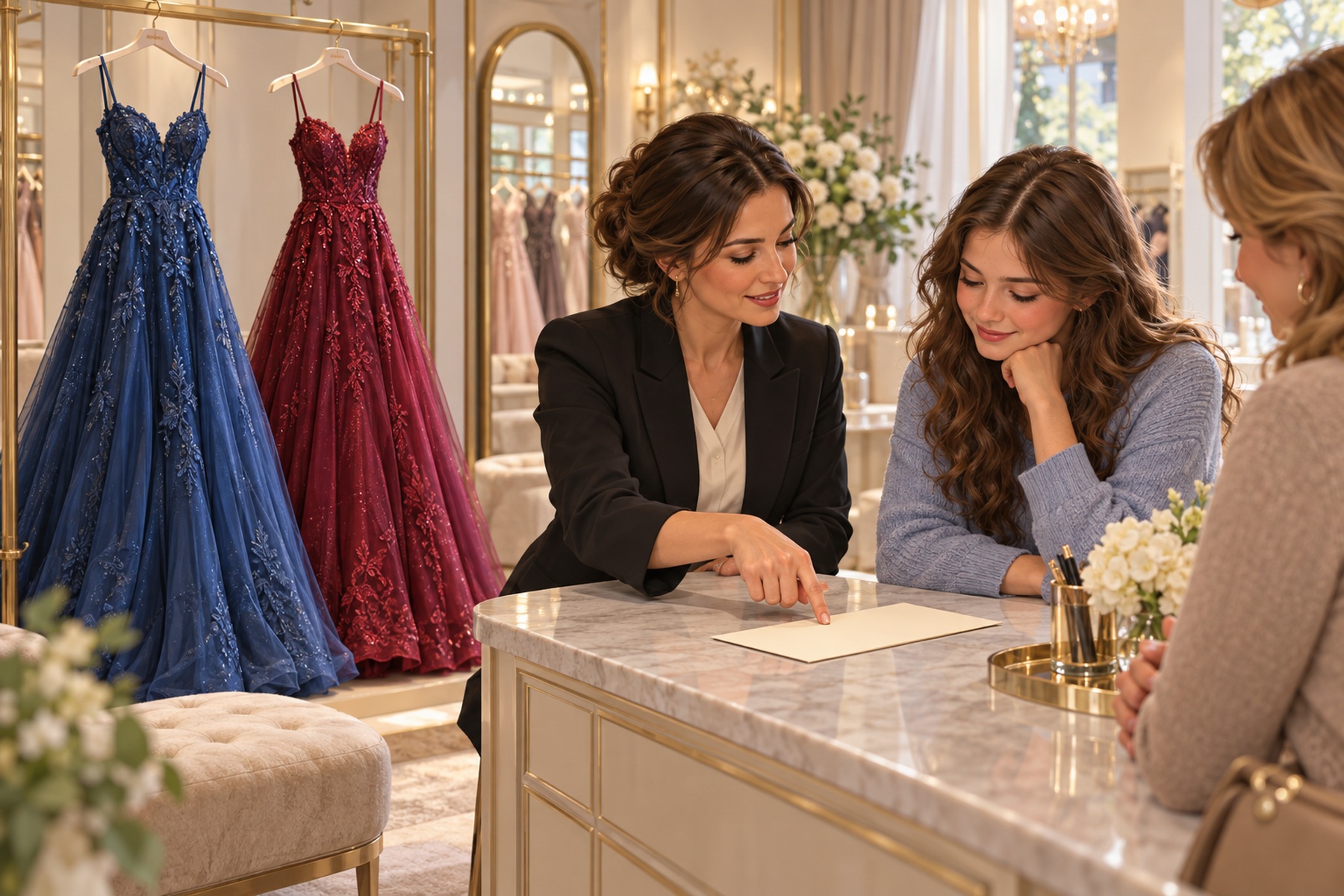
A prom dress registry is useful only when you know what the store records and what its promise covers. Ask for the written policy before treating “registered” as a guarantee that nobody at prom can wear the same dress.
Find the boundary of the promise
One seller’s policy can be quite specific. Color It In Boutique says it registers a style-and-color combination by grade and school at purchase. It allows the style in another color and excludes guarantees against purchases from outside its registry. That is an example of that boutique’s terms, not a description of another store’s service.
Your selected retailer may use a different process. Ask whether it records a style, color, school, grade, event or year, and whether all its locations and sales channels participate. If the written wording does not answer, request clarification before relying on the promise.
Make a registry scope card
| Question | Store-confirmed answer |
|---|---|
| Exact style and color recorded | ________ |
| School, grade, event and year used | ________ |
| When registration takes effect | ________ |
| Participating locations and channels | ________ |
| Treatment of another color or later event | ________ |
| How an error is corrected; named contact | ________ |
| What outside purchases are excluded | ________ |
Save the policy date and your own purchase confirmation. Use information about your order, not classmates’ names, photographs or purchases. A registry question does not require access to other students’ private records.
Keep payment terms separate
Registration does not, by itself, tell you whether a deposit can be canceled, an order exchanged or a payment refunded. Read those terms independently. If the retailer offers a remedy when its own registry process fails, ask for that remedy in writing rather than assuming what it must be.
The prom deposit and order checklist helps you record the actual item and payment conditions. Attach the registry card to it, with any unanswered questions still visible.
Make the decision beyond exclusivity
Ask yourself whether you would still like this dress if someone else wore the same design. The answer need not dismiss your preference for something distinctive; it helps you understand how much your choice depends on a promise the store may not be able to make.
For example, a registry limited to a particular style and color leaves another color as a possible duplicate of the design. A secondhand purchase may sit outside the process altogether. Those are questions to settle before checkout, not reasons to investigate classmates.
If a duplicate later appears, the same-dress conversation guide addresses the separate social decision. For today’s purchase, leave with the scope confirmed, the order terms understood and a dress you want to wear on its own merits.
Original editorial planning guidance. Primary sources and internal destinations checked October 23, 2026. Featured image: conceptual styling illustration, not an exact retail product or a documented event.