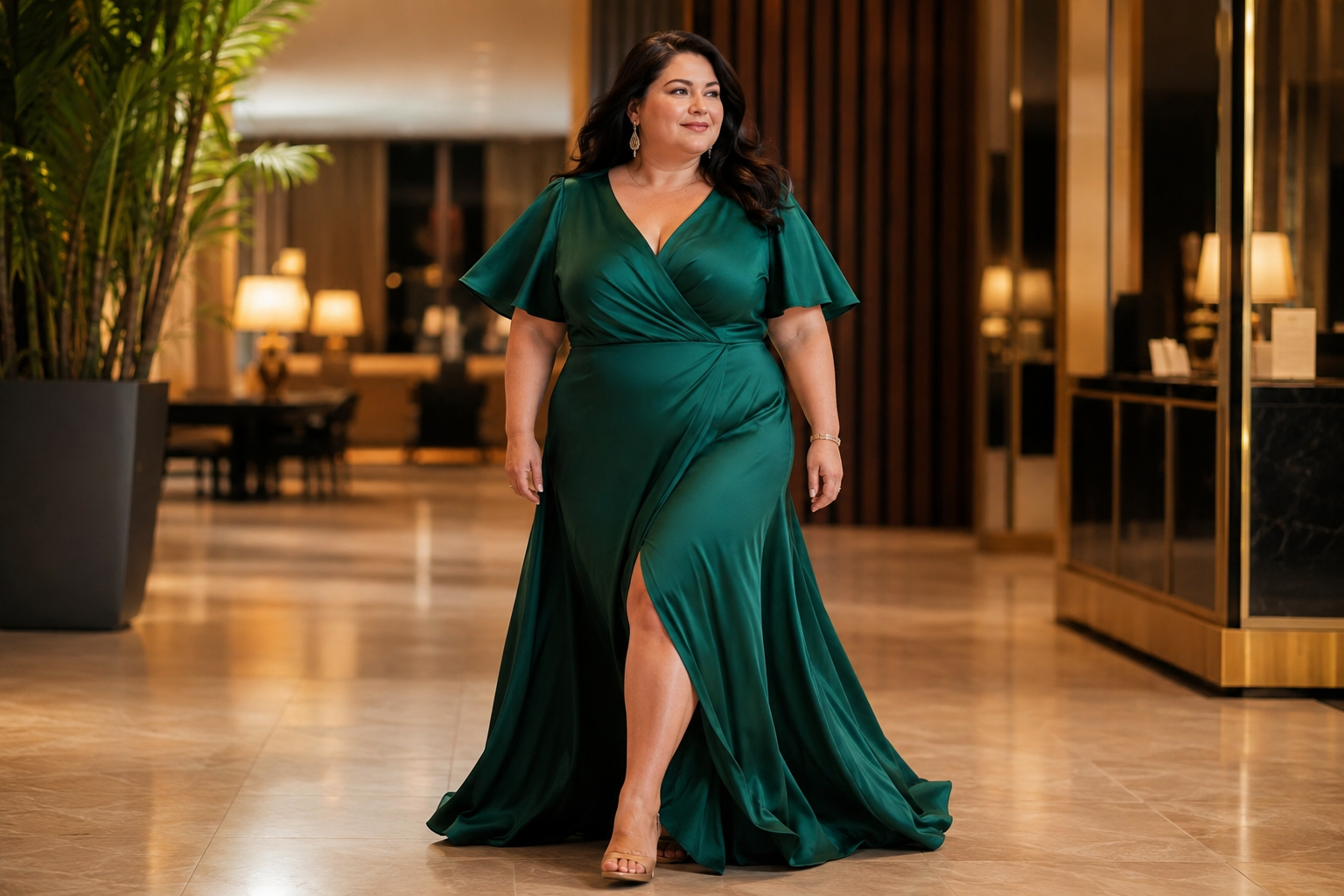
Use a formal dress’s size guidance to start the conversation, then assess the actual garment. A label number cannot describe how the bodice, sleeve, lining and skirt work together on you. The goal is an outfit you enjoy wearing, with any unresolved fitting question addressed before purchase.
Keep the chart and the try-on connected
Follow the maker’s measuring instructions for the exact style and ask the retailer about measurements that fall between options. David’s Bridal provides measuring guidance and size charts as a starting point. A chart does not guarantee a finished fit or establish what another brand’s number means.
Record the sample size and any temporary clips. If the sample cannot be fastened comfortably, ask the stylist what it can show you and what remains uncertain. Avoid forcing a fastening or deciding by a number alone.
Observe each part without prescribing a shape
| Area | What to notice | Question to record |
|---|---|---|
| Bodice | Pressure, gaping or unwanted movement | ____ |
| Sleeves and armholes | Comfort during ordinary reach | ____ |
| Waist and skirt | Intended seam position and seated feel | ____ |
| Lining and closures | Contact, fastening and support questions | ____ |
| Hem with intended shoes | Clear steps and desired length | ____ |
A waist seam can be placed high, low or shaped as part of the design. Describe what you see instead of assuming it must sit at one universal point. Likewise, pulling or gaping calls for an assessment; it does not tell you by itself which size or alteration will solve the issue.
Read construction alongside the fabric name
Ask which parts are lined, whether a stretch claim applies to the shell or another component, and what the care label says. The shell-and-lining guide helps keep those descriptions separate. Satin does not require shapewear, and a fabric label cannot promise comfort for every wearer.
Try the underlayers you actually choose to wear. Sit, stand and move in your ordinary comfortable range, with the fitter’s permission if the garment is pinned. Stop when something feels restrictive and explain where.
Get the proposed work assessed before buying
Ask an alterations professional to inspect the actual piece and explain what is feasible, what it costs and when it can be ready. David’s Bridal notes that a quote depends on seeing the garment and the complexity of the work. Taking in is not automatically simple, and letting out is not automatically available.
Use the alterations-estimate checklist to keep the decision specific. Choose the color and silhouette you prefer; neither body size nor an imagined sales ranking needs to decide those for you.
Sources and scope
Reviewed October 24, 2026. The comparison tool and styling suggestions are original editorial guidance, not sales rankings or personal product tests.
- David’s Bridal measuring guide: Measuring guidance and charts.
- David’s Bridal alterations FAQ: Assessment and complexity of specific alterations.
Featured image: conceptual editorial illustration, not an exact retail product or a documented customer.