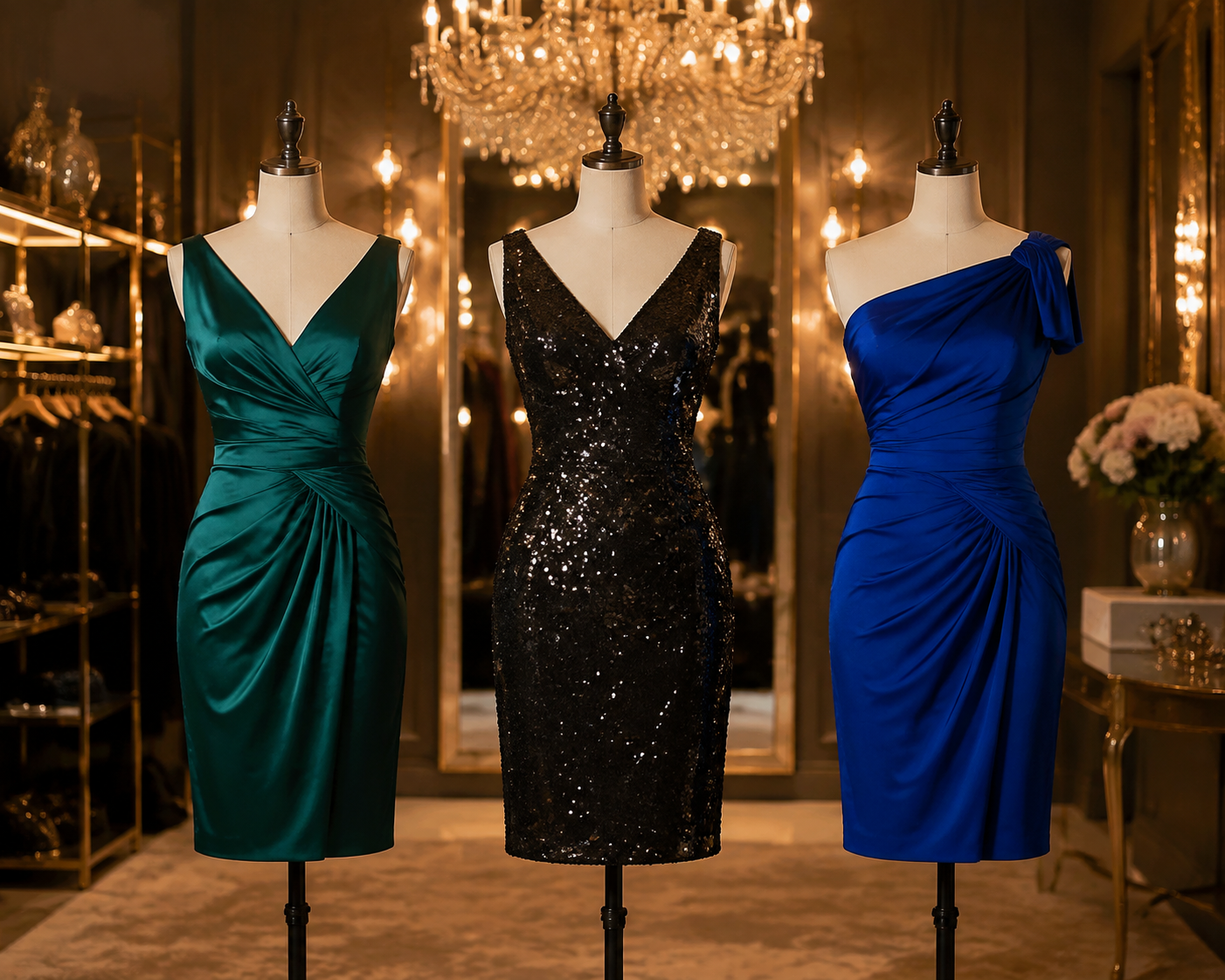
Choose a homecoming dress color by comparing garments you would enjoy wearing. A popularity list cannot tell you which shade you like, whether a particular fabric suits the outfit, or what another student will choose.
Make a shortlist you can explain
Pick two or three colors that interest you and write a reason beside each. Perhaps you like the brightness of cobalt, the quieter appearance of navy, or a pale shade with jewelry you already own. These are personal responses; hair color, complexion or class year does not assign you a permitted palette.
Read the school’s current clothing guidance before shopping. If there is a color request or themed event, clarify what it means. Otherwise, do not treat an online claim that a shade is “out” as a school rule.
Compare color and surface separately
A green satin dress and a green sequined dress are different garments. Compare the color you see, the amount of shine, the texture you enjoy and the actual fit. If every detail changes between two options, record which difference matters rather than giving color all the credit.
| Observation | Option A | Option B |
|---|---|---|
| Exact style and color name | ____ | ____ |
| What I like about the color | ____ | ____ |
| Surface: shine, texture, decoration | ____ | ____ |
| Works with pieces I own | ____ | ____ |
| Question still to resolve | ____ | ____ |
Where a shop permits it, view the same garment in more than one ordinary area of light and take a reference photo without filters. A photo is a reminder, not a promise about the school’s lighting. Tadashi Shoji’s FAQ is one maker’s explicit reminder that screens can display colors differently.
Keep the outfit in the comparison
Try the intended bag and shoes beside each contender. A color that requires several new purchases may still be your favorite, but count that full cost using the whole-look budget. Do not assume metallic accessories must be matched to a particular shade.
Leave the “twin odds” out of it
No color choice can guarantee that another student will not wear something similar. If duplication concerns you, read how to handle a shared dress choice and decide what matters to you. Avoid assigning probabilities to colors without school-specific evidence.
Finish with the exact style and color reference, the pieces you will wear with it and one reason you chose it. You do not need a trend ranking to justify a color you enjoy.
Sources and scope
Reviewed October 24, 2026. The comparison tool and styling suggestions are original editorial guidance, not sales rankings or personal product tests.
- Tadashi Shoji FAQ: Used only for the limitation of color viewed on a screen; not a homecoming trend source.
Featured image: conceptual editorial illustration, not an exact retail product or a documented customer.