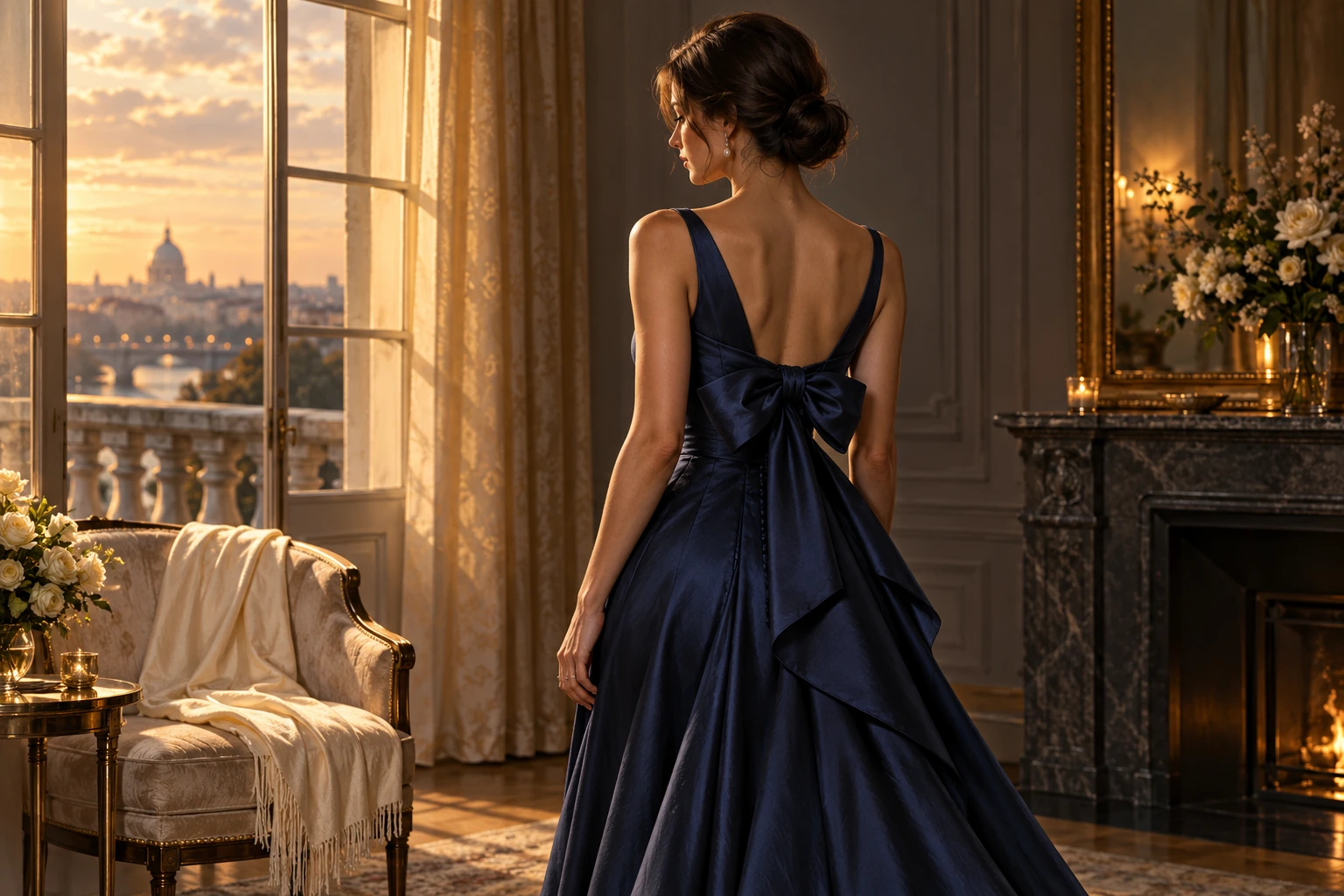
Editorial styling illustration; not an exact retail product or a documented event.
A bow, line of buttons or shaped back may be the detail that makes you love a dress. Give that view the same attention as the front. Your hair, layer and dressing routine can change what is visible—and you may decide that comfort matters more than showing every detail.
The three approaches below are styling suggestions. They do not prescribe a hairstyle or establish how a particular dress is fastened.
Name the detail you want to see
Write one clear preference: the whole bow, the upper button line, a section of lace or simply the clean back silhouette. Then inspect the maker’s rear and side photographs and ask which features are functional. Do not assume a visible tie supports the dress or that a decorative bow is its closure.
The back-and-closure guide helps separate construction from appearance. Once the fastening is understood, you can make the styling decision with fewer guesses.
Try three different intentions
| Approach | A proposed way to try it | Question to settle |
|---|---|---|
| Reveal the detail | Move hair clear of the feature if you like that hairstyle; try the dress without the arrival layer. | Do you enjoy the result, and when will the layer be off? |
| Frame part of it | Try hair to one side or a layer that leaves a chosen area visible. | Does it stay comfortable during normal sitting and turning? |
| Cover it comfortably | Wear the hair and layer you prefer even if the feature is partly or fully covered. | Does anything bunch, press or catch beneath the layer? |
These are options to compare, not a hierarchy. A dress can still be the right choice when its back detail is visible only briefly. You do not owe a design feature the whole evening.
Use a back-view worksheet
| Record | Your notes |
|---|---|
| Feature I want visible, and when | ________________ |
| Exact style and confirmed closure type | ________________ |
| Hair arrangement tried | ________________ |
| Jacket / wrap tried, on and off | ________________ |
| Sitting observations at the detail | ________________ |
| Normal turning and reaching observations | ________________ |
| How I access the fastening | ________________ |
| Chosen help and agreed dressing order | ________________ |
| Where the removed layer will stay | ________________ |
| Unanswered construction or alteration question | ________________ |
Use a mirror arrangement or permitted photographs that let you see the back without straining. If another person helps, explain the view you want and ask them to describe what they see before adjusting anything. Stop if hair or fabric catches; do not pull it free as a test.
Check the complete dressing order
Work out whether the closure can be reached after the hair is arranged and the accessories are on. If you want help, agree who provides it and which steps they handle. Try sitting with the actual back detail and layer rather than judging only a standing pose.
A structured bow beneath a close jacket may change how the two garments sit together. Record the observation and ask the fitter about the actual combination. Avoid adding clips, pins or improvised lifting points to make a photographed idea work.
Bring the front and back together
Check earrings once the hairstyle is settled; our earrings-and-hair guide keeps that comparison in the same outfit. Save one front and one rear reference if useful, plus the agreed dressing order.
Your finished plan should explain what you want visible, how you will get dressed and where the layer goes. That is enough to let the detail be part of the evening without making it a constant adjustment.