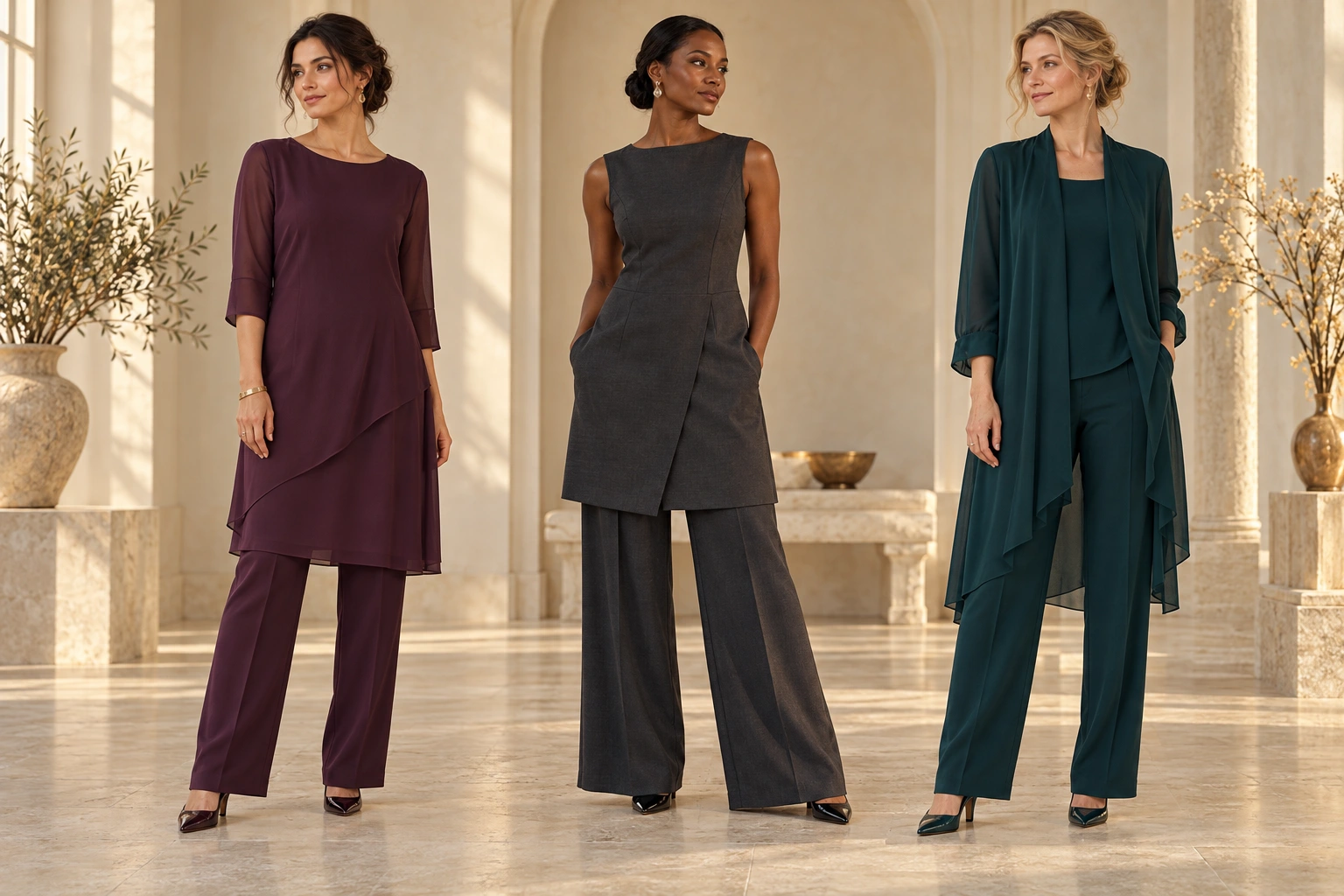
A dress over trousers creates two visible hemlines and a relationship between layers. Try it as a deliberate outfit experiment with pieces you may already own. The aim is to choose a silhouette you enjoy, without treating the combination as a trend requirement or a correction for your height or shape.
Compare three starting points
| Editorial starting point | What to look at |
|---|---|
| Simple knee-length dress + straight formal trousers | The length of trouser visible below the dress and the continuous side line. |
| Shorter structured dress + fluid wider-leg trousers | How the firmer upper layer meets the moving volume below it. |
| Open-front dress or tunic designed for layering + tailored trousers | The intended opening, the top beneath it and the frame it creates. |
These are styling proposals, not rules about which body should wear which combination. For the third route, choose a garment intended to be worn open in that way. Do not unfasten a dress contrary to its construction to imitate the illustration.
Keep the comparison consistent
Use one pair of shoes while comparing the three options. Put the trousers at their intended waist position and fasten each piece normally. Look at the front, side and back before adjusting accessories. Ask whether the layers settle easily or whether you are repeatedly pulling one down over the other.
Try sitting and walking in the space available. Notice bulk at the waist, contact between fastenings, and whether either hem interferes with your step. If a layer catches, change the pairing rather than forcing the fabric into place. The formal-trouser guide helps assess the hem with the shoes you intend to wear.
Use a three-photo comparison sheet
| Record | Look 1 | Look 2 | Look 3 |
|---|---|---|---|
| Photo reference: same shoes and viewing distance | ________ | ________ | ________ |
| Visible trouser length below dress | ________ | ________ | ________ |
| Intended color relationship | ________ | ________ | ________ |
| Layer interaction at waist and side | ________ | ________ | ________ |
| Movement and seated observations | ________ | ________ | ________ |
| Preferred result / change to compare | ________ | ________ | ________ |
Photographs are optional private notes. Include both hemlines and the shoes, and use a similar stance so that a change in pose does not decide the result. You might prefer a tonal combination or a deliberate contrast; neither needs to imitate a matching set.
Check the occasion before calling it finished
A layered outfit is not automatically black tie. Compare the complete look with the event’s actual formality and ask the organizer about any unclear requirement. Our formal-separates guide offers the related principle of trying pieces together, although its example is a top and skirt rather than overlapping dress and trouser layers.
Choose the version that feels intentional and manageable to you. Record one reason for the preference—more visible trouser, less waist bulk, or a color relationship you like—then stop adding pieces unless they answer a real need in the outfit.
Original editorial planning guidance. Sources and linked guides reviewed October 22, 2026. Featured image: conceptual styling illustration, not an exact retail product or documented event.