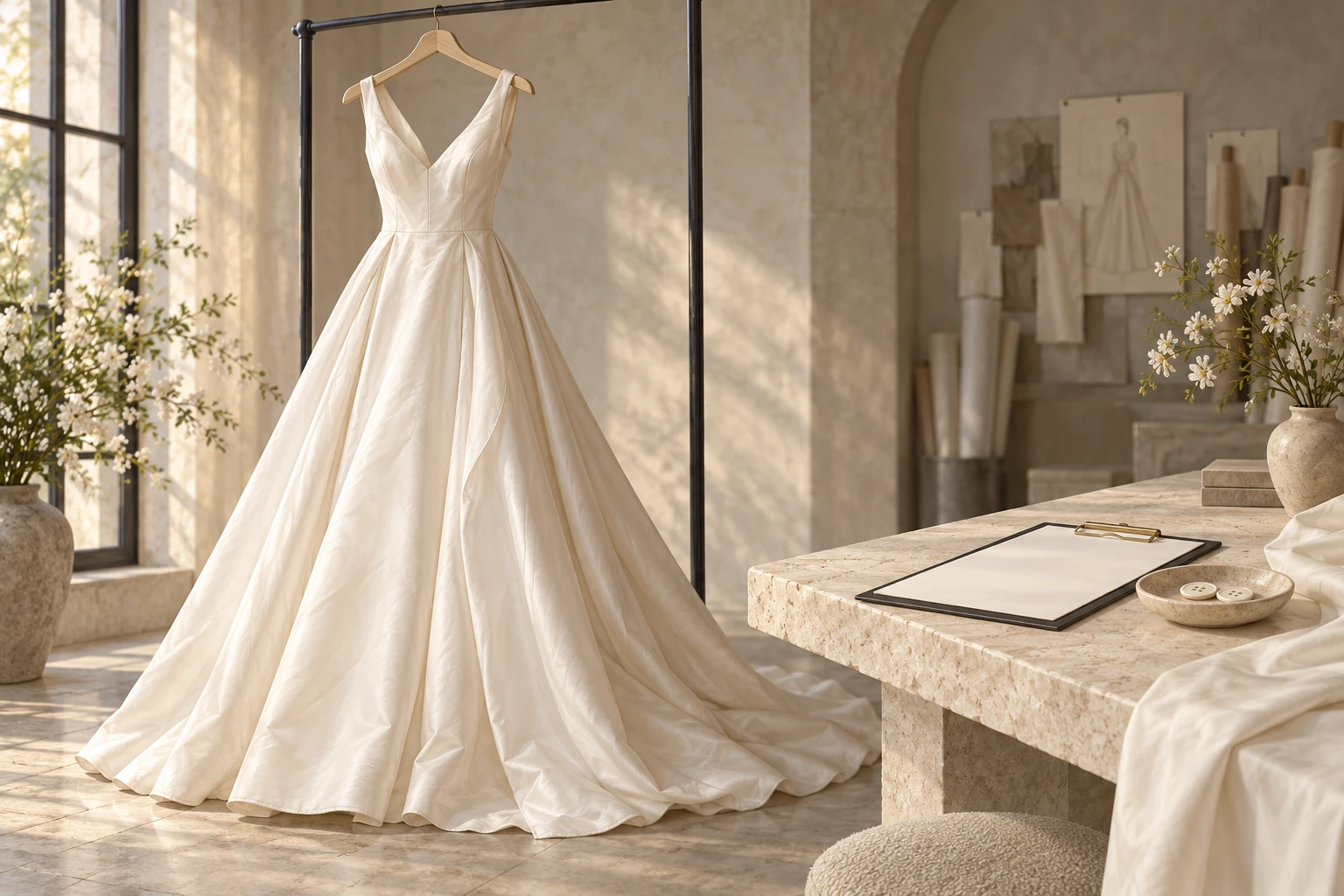
Editorial styling illustration; not an exact retail product or a documented event.
When you buy a bridal sample, the decision is about the particular gown in front of you. The style name matters, but so do its current measurements, included pieces and condition. A sample can be a good choice without being damaged, discounted overall or ready to wear immediately.
Use this inspection sheet before paying. It separates what you can observe from work someone has agreed to do. If you are only trying a sample before ordering a new gown, use our sample-size appointment guide instead.
Identify the gown that will be yours
Ask the seller to put the designer, style reference, label size and full color description on the paperwork. Confirm that the agreement covers this physical garment. Record any known previous alterations, including a shortened hem or changed straps; a label size alone cannot describe those changes.
With the seller’s permission, inspect the front, back and inside together. Ask staff to handle delicate layers and fastenings. Look at the hem, underarms, closures, seam edges and embellishments in ordinary light. Describe what you see rather than guessing whether a mark will clean out or a missing piece can be replaced.
Make an inspection record
| Record | Your notes |
|---|---|
| Seller, date and exact gown identity | ________________ |
| Label size and known previous alterations | ________________ |
| Visible condition: location and description | ________________ |
| Missing buttons, beads or other pieces | ________________ |
| Included straps, sleeves, belt, bag or spare pieces | ________________ |
| Photos permitted and their file references | ________________ |
| Work promised by seller, responsible person and due date | ________________ |
| Independent repair/cleaning assessment still needed | ________________ |
| Alterations specialist’s written feasibility assessment | ________________ |
| Collection date and condition to recheck at handoff | ________________ |
A blank answer is an open question. If the seller does not know whether the gown was altered, record “history not confirmed.” Do not turn an assumption into a promise on your checklist.
Compare the whole commitment
| Cost | Written amount / estimate | Who confirms it |
|---|---|---|
| Gown and applicable tax | ________________ | ________________ |
| Repairs or replacement pieces | ________________ | ________________ |
| Cleaning assessment and service | ________________ | ________________ |
| Fitting and alterations | ________________ | ________________ |
| Collection or delivery | ________________ | ________________ |
Keep quoted amounts distinct from estimates. For each proposed service, ask what is included and what might change after inspection. Our alteration-estimate checklist helps make that discussion specific. A lower gown price is not enough to establish a lower finished-outfit cost.
Read this seller’s terms
As a store-specific example, Ivory & Beau’s sample-sale page, checked October 20, 2026, describes its samples as sold as-is and its sales as final. That example does not establish another salon’s terms or confirm that a listed gown remains available.
Before buying, read the actual seller’s payment, cancellation, return, repair and collection wording. Ask how agreed work will be recorded and what happens if it cannot be completed. Keep the receipt, agreement and permitted condition photographs together.
Your decision before the deposit
Proceed when you can identify the exact gown, accept its documented condition and terms, and understand the cost and feasibility of the work you need. If a repair or fit change is essential but unassessed, ask for that answer before committing. At collection, compare the garment and included pieces with the record you made.