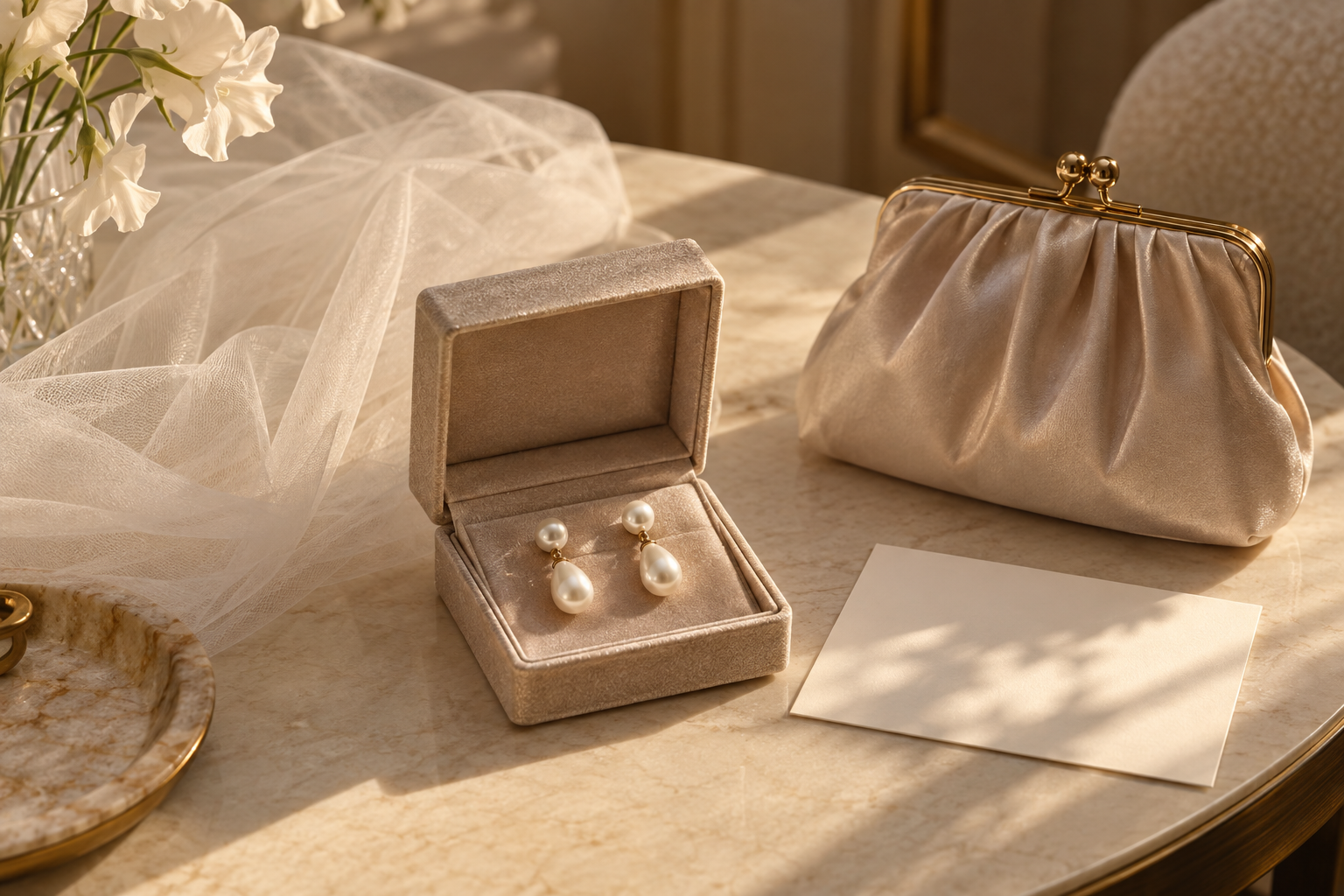
Custom editorial illustration; not an exact retail product.
Borrowing an accessory can give an outfit a personal connection without adding another purchase. It also creates a small responsibility: returning the right piece in the condition you received it, with everyone clear about what has been agreed.
Settle the practical details while the arrangement still feels relaxed. A short conversation about a veil, bag or pair of earrings can prevent uncertainty after a long event. The plan should suit the value and meaning of the piece, not turn every favor into paperwork.
Confirm exactly what is being borrowed
Look at the item together, including any separate components. A jewelry box, spare fastening, storage pouch or detachable strap may be part of the handoff. Note what should come back with it.
A quick photograph can help both people remember the arrangement. Ask before taking or sharing images, especially when the item is personal. Keep the record private unless the owner is happy for it to be shown.
If the accessory has an existing mark or loose detail, discuss it now. The aim is a shared understanding, not assigning blame later.
Ask what changes are acceptable
Do not assume borrowing includes permission to alter the piece. Ask before changing a fastening, adjusting a veil comb, attaching a decoration or having anything modified.
If it does not work with your outfit as it is, you can choose another option. That is often simpler than turning a generous loan into a repair or alteration project.
Also agree on cleaning. The owner may have specific instructions or prefer to handle it themselves. Avoid offering an unfamiliar treatment just to make the item seem especially polished on return.
Keep care information specific
For jewelry, identify what the owner knows about the materials and any instructions from their jeweler. GIA notes that jewelry materials and treatments have different care needs, so one cleaning method does not suit everything. Its jewelry-care guidance is a useful starting point for questions.
For other accessories, ask for any supplied care information and storage preferences. A special piece may need a particular box or arrangement. Keep those details with the item rather than relying on memory.
If something happens during the event, tell the owner honestly before attempting a fix. Let the next step reflect the actual item and the owner’s wishes.
Assign a place when it is off
Decide where the accessory goes if you remove it. Bring its agreed storage if practical, and avoid passing it through several people without a clear handoff.
A getting-ready photograph is not a storage plan. Once photographs are finished, return the piece to the person wearing it or the designated place. Make sure anyone helping knows that it belongs to someone else.
If the event involves travel, include the accessory in your departure check before leaving the accommodation.
Set a realistic return arrangement
Agree on a day and a method for returning the item. If a third person will carry it, make that explicit. Do not assume leaving it with a relative counts as a completed return unless everyone has agreed.
Check the contents against your initial note, then let the owner know the handoff is complete. A simple thank-you with a personal detail about wearing the piece is enough. Thoughtful borrowing includes the quiet final step of getting it safely back to its owner.