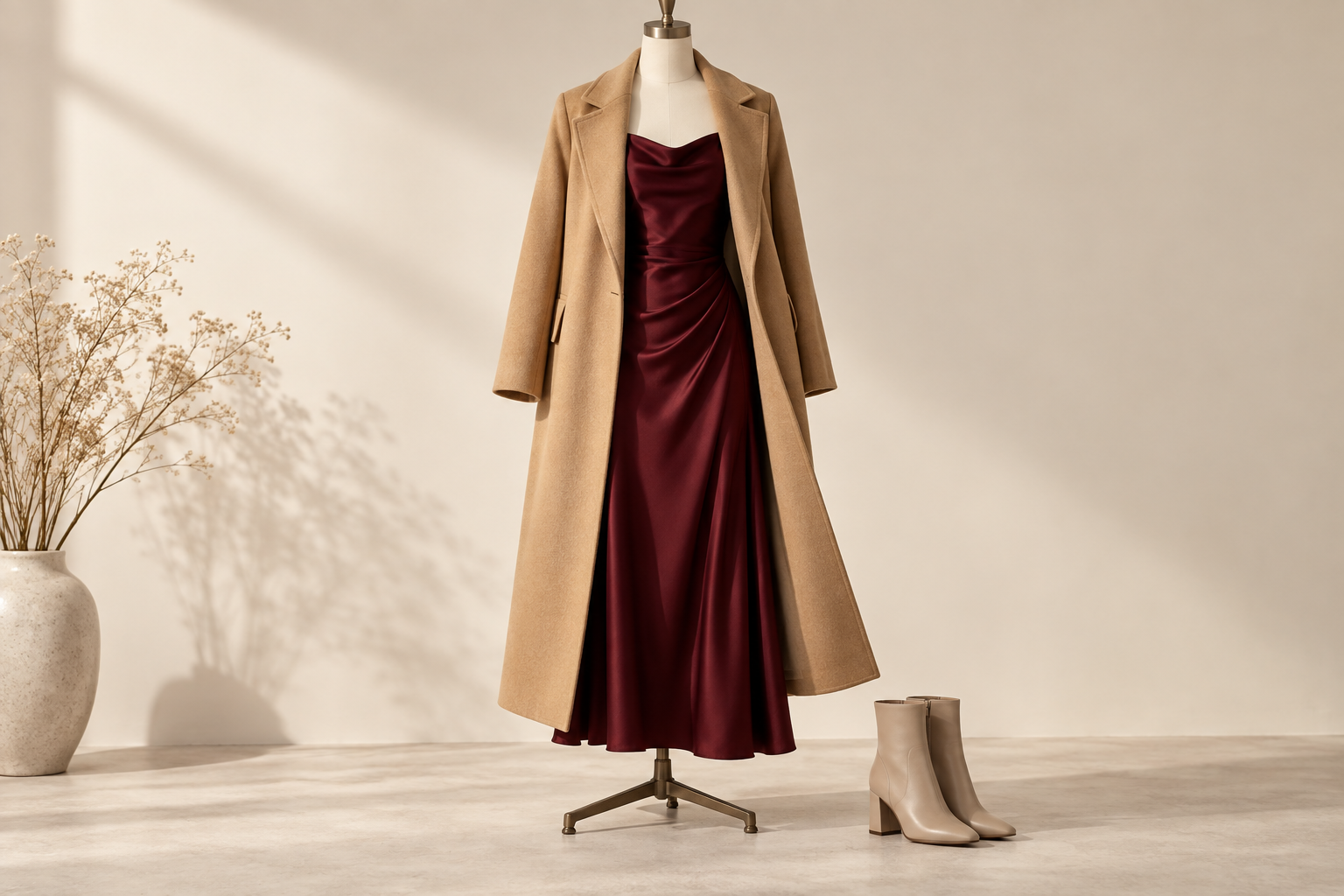
A long coat should be assessed over the occasion outfit you plan to wear, not as a separate purchase. Put on the dress, its intended underlayers and shoes, then compare the coat open and closed. The useful questions are whether it accommodates the outfit and whether you like the combined shape.
There is no need to buy a coat solely because its hem is a different length from your dress. Begin with the coat you own and decide which part of the combination, if any, needs attention.
Look at the whole outline first
Use a full-length mirror. Does the open coat frame the dress in a way you enjoy? When closed, does the coat still sit as you expect? Look from the side as well as the front, especially if the dress has a full skirt, a bow or another detail underneath.
A visible dress hem can be intentional. A coat that covers most of the dress can also work. Instead of applying a universal length rule, assess the actual proportions and the event. The arrival look does not have to duplicate the look you wear inside.
Check space without forcing the fastening
With the outfit underneath, try the coat’s normal closure gently. If it requires pulling or compressing a prominent garment detail, pause. Do not assume it will become comfortable after a journey or that a decorative dress element can simply be flattened.
Move your arms in the ordinary ways you expect to use them: reaching for a bag, holding a rail or greeting someone. If the sleeves feel restrictive, assess another coat or discuss the fit with a professional. Do not keep forcing a movement through resistance.
Examine the points where the pieces meet
- Neckline: does the coat collar sit comfortably with the dress neckline and any necklace?
- Sleeves: can the dress sleeves sit inside the coat without bunching in a way you dislike?
- Waist: does a coat belt cross a dress detail you want to protect?
- Hem: can you manage both lengths on the actual walking route?
These are checks on your own outfit, not predictions about a particular fabric. Follow the garments’ care instructions and avoid testing pins, adhesive or improvised alterations on a delicate surface.
Decide what happens when you arrive
Check whether there will be a coat check or another suitable place for the outer layer. If you will keep it with you, consider how that works at the ceremony seat and reception table. A large coat, handbag and wrap can become several belongings to manage.
Use the event location and a current forecast closer to the date to decide how much protection you need. Do not treat a light decorative layer as a substitute for whatever outerwear your own comfort requires.
Only then consider another piece
If the coat you own does not work, name the problem before shopping: insufficient sleeve room, a closure that conflicts with the dress, or a length you find difficult to manage. A clear problem gives you something specific to compare.
A wrap is another styling option, but it performs a different job from a substantial coat. Our Belle Edit includes researched finishing-piece ideas with affiliate disclosures; use it after deciding what you actually need, and confirm current product details with the retailer.
Your next step: try the complete outfit with your existing coat and settle where the coat will go on arrival. Buy only if that rehearsal reveals a real gap.